Want to stay informed and take action for wild fish? Join our community and get updates straight to your inbox.
Subscribe for regular updatesNew developments are being proposed without adequate provision for sustainable water supply and sewage infrastructure, in doing so plans fail to protect the surrounding freshwater environment. Alongside this, proposed changes to the planning system break promises the government has made to protect nature and wildlife and pose a huge threat to wild fish populations.
Want to stay informed and take action for wild fish? Join our community and get updates straight to your inbox.
Subscribe for regular updatesFollow the links below to discover more and learn from our team about the most recent campaign updates.
The government is proposing a new scheme that could see developers pay a fee to get around environmental protections. Meanwhile, our rivers and wild fish pay the price.
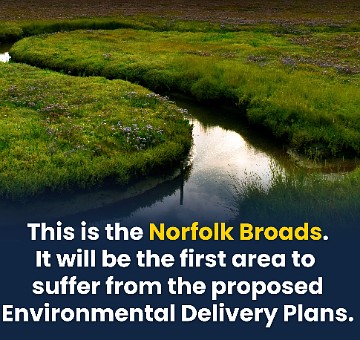
The first of these so-called Environmental Delivery Plans (EDPs), drafted by Natural England, has been announced in Norfolk and is now in a consultation period.
EDPs have been designed to help developers “tackle” pollution when building new homes. Through the scheme, developers can pay money into a kitty, which is then used to fund environmental protection projects.
We believe this sets up a pay-to-pollute system, one which will let damaging development be fast-tracked without proper environmental protections in place.
Whilst we await the as yet un-revealed “Clean Water Bill”, we have taken stock and considered whether the Government’s view that the “system is broken” is in fact correct. WildFish has written to the Secretary of State to urge for more workable alternatives rather than the upheaval of the regime which, in our view, would lead to serious uncertainty and chaos.
The simplest methods of ensuring the robust operation of the sewage and water provision systems are as follows:
In May 2025, we challenged a planning decision by Buckinghamshire Council for 170 new houses in the village of Maids Moreton in Buckingham. The proposed development could see an already overwhelmed sewage works spew even more untreated sewage into the Great Ouse, one of the longest rivers in England, with a catchment that holds several protected areas and sites of scientific interest.
Following three days in court during October 2025, the High Court decided to dismiss our judicial review challenge. We appealed this decision.
In March 2026, the case came to an end. While the Court of Appeal stood by the High Court ruling they made a crucial clarifiaction that development could not begin without the necessary upgrade to the sewage works to ensure appropriate capacity.
This case demonstrates a serious lack of alignment between sewage capacity and development, with over-stretched councils handed the responsibility to “regulate” via planning conditions under pressure from developers and limited input from water companies as to whether the capacity to deliver water and sewage works to these developments is even available.
We are aware of just how much of a problem sewage capacity is across England and Wales. As a small charity, it is difficult for us to get involved in every local campaign. You can support our work in this area by donating to ensure our work in this area continues.
We are deeply concerned about the consequences of the new measures under the Planning and Infrastructure Act 2025 (PIA) and, in particular, the policies and measures under the Environmental Development Plan (EDP) regime where legal protections for sensitive sites such as protected rivers will be disapplied.
The Act provides for the disapplication of various conservation protections where the developer has committed to pay a levy
The first EDPs will cover the rivers Avon, Axe, Camel, Clun, Eden, Kent, Lambourne, Lugg, Mease as well as the Solent (including River Itchen), the Somerset Levels and Moors, Stodmarsh, Teesmouth and Cleveland Coast. There will also be an EDP for the Broads (including River Wensum).
WildFish will be watching and pressing to hold the regulators and planner to account as well as finding ways to get this bad law reversed. The first EDPs are due imminently – and we will be fighting to stop further destruction to protected sites.
The environmental impact of planning without a sustainable water supply and sewage infrastructure.
Read our exchange with 26 local planning authorities.
Read our report on the impact of water stress and the harmful effects of over-abstraction on our declining rivers.
Read the latest research on the impact of sewage pollution in rivers.
Read our response to the Independent Water Commission.
Support like yours allows our determined campaigning team to fight the destruction caused by open-net salmon farming, pollution and over-abstraction
Find out about all the ways in which you can help wild fish…