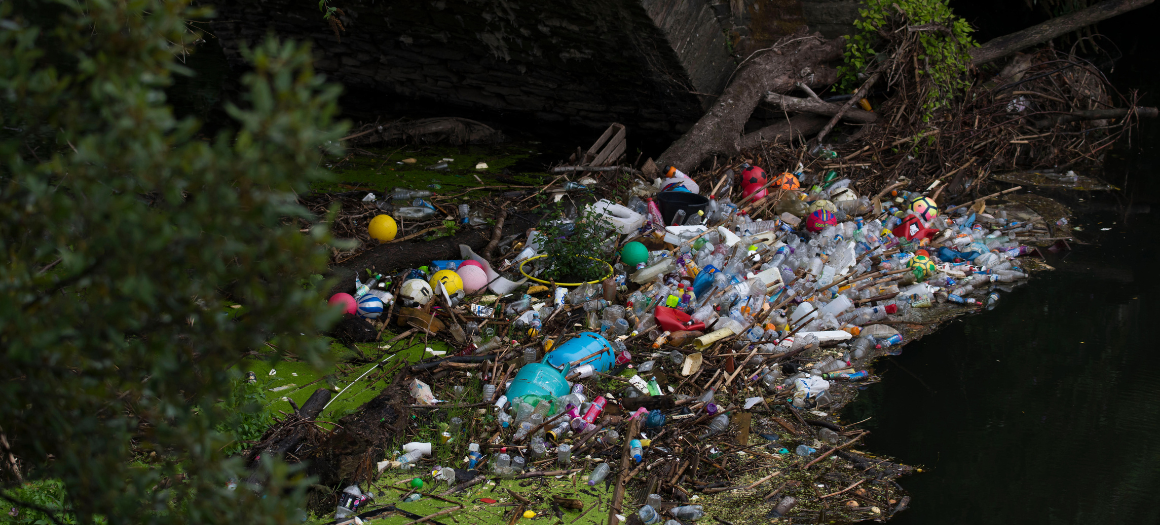
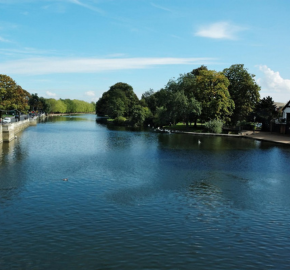
Rivers are the natural corridors that connect the most mountainous terrestrial regions to the depths of the oceans. They act as thoroughfares allowing migratory species like European eel and Atlantic salmon to move between marine and freshwater habitats to fulfil their lifecycles. [1] They also naturally transport large volumes of nutrients, substrates, and organic material downstream. Unfortunately, this includes huge volumes of plastic pollution, much of which will ultimately end up going out to sea (Ritchie, 2021).
It’s nearly impossible not to interact with plastics every day. The packaging on our food, the materials in our clothes, whatever electronic device you are reading this blog on. They’re literally in our blood (Leslie et al, 2022). Incredibly useful but also hugely problematic, plastic pollution is a widespread problem in UK rivers and is detrimental to the aquatic wildlife that call them home. During its journey downstream, plastics negatively impact freshwater habitats, building up in sediments and impacting the native flora and fauna.
In this blog, Dr Sam Green unpicks plastic pollution in rivers: How does it affect wild fish and other river inhabitants? What are these plastics? How are they entering rivers?
The ecological impact
There are several ways in which plastic pollution negatively impacts rivers and wildlife. These include:
1. Interference with natural processes
Caddisfly behaviour is one visually stark reminder of the large amounts of microplastics found in our rivers. Many caddisfly larvae build themselves remarkable portable structures to live in, using a silk secretion to stick together bits of substrate from the riverbed. Some species use fine sand grains, some use woody debris and plant matter, while others use a combination of various natural materials from the local environment. Observations from freshwater entomologist, Dr Nick Everall (Aquascience Consultancy Ltd), indicates caddis cases containing microplastics are being found more regularly in invertebrate samples. The fact these animals are choosing to use these microplastics in their case construction hints at their prevalence on riverbeds.
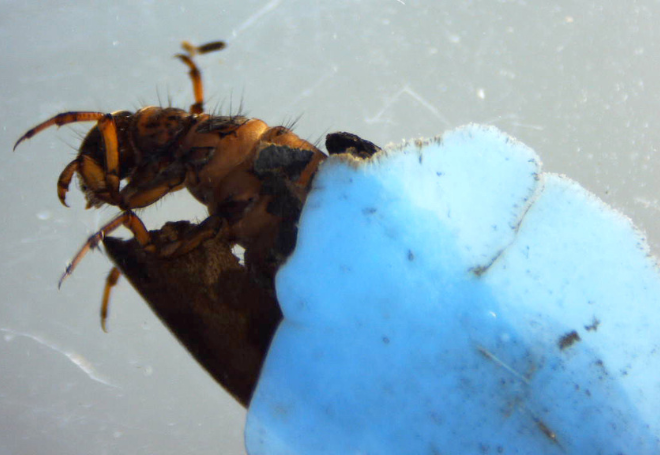
Image 01: A caddisfly case containing microplastics. ©NickEverall
2. Plastics being mistaken for food
While animals making use of plastics in natural behaviours may be horrible to see, the real threat to our wildlife comes from when microplastics are mistaken for food.
Research in South Wales has shown microplastics to be present in 50% of invertebrate samples, with both detritivory (animals feeding on decaying organic matter) and filter feeding thought to be two pathways by which plastics may enter freshwater food webs (Windsor et al, 2019). The impacts of the ingestion of plastic particles are less well understood in freshwater invertebrates compared to their marine counterparts.
The effects on mortality, development, feeding behaviours and nutrient uptake vary considerably between different invertebrate taxa (Haegerbaeumer et al, 2019). However, what is clear is that microplastics enter freshwater food webs and can have negative impacts on aquatic animals, particularly as they begin to move up to higher trophic levels.
3. Changes to the normal functions of wildlife
Predatory animals not only mistake plastic pollution itself for prey but also eat animals that themselves contain microplastics. This leads to a process called bioaccumulation – whereby microplastics build up to higher concentrations as they travel up the food chain. These microplastics can cause physiological issues throughout an animal’s body.
For example, in freshwater fish microplastics have been found in a wide range of organs from the gills to the brain (Ghosh et al, 2025). This has been shown to have wide-ranging detrimental effects on health, from reducing reproductive success to causing neurological problems. These issues may be caused by the plastics themselves or by toxins associated with them. [2] As with the plastics themselves, these toxins can build up to higher concentrations in predatory animals like fish, a process called biomagnification.
Types of plastic pollution in rivers
The plastic pollution that is found in rivers can be grouped into a range of size categories: megaplastics (>50cm), macroplastics (5-50cm), mesoplastics (0.5-5 cm), and microplastics (<0.5cm) (Ocean Cleanup, 2025). Aside from how many words beginning with ‘M’ we can use to describe types of plastic pollution, it’s important to remember that these categories are also inextricably linked.
Plastics entering the environment will degrade through a variety of processes. The mega becomes the micro. What was one large piece of plastic can become countless smaller particles.
In many ways it is at the ‘micro’ scale [3] where plastic in the environment becomes particularly worrying. At this smaller scale plastics are of a size to interact in more subtle ways with natural systems and processes, infiltrating food chains and compromising physiology. As these smaller plastics are less obvious, the scale of the problem can also slip from our awareness.
Two major sources of the microplastics that we generate are microfibres (e.g. synthetic fibres from our clothing) and microbeads (e.g. plastic spheres added to personal care products). In 2018, the government banned the manufacture and sale of ‘rinse-off’ cosmetic and personal care products containing microbeads in the UK (DEFRA, 2018). This is undoubtedly a win, but microbeads are still legally used in ‘leave on’ cosmetic products such as lipstick and suncream (which couldn’t possibly enter the drainage systems, could they! …).
How plastics get into rivers
The wastewater industry is a major interface between our domestic lives and our local rivers. So, it’s no shock that research has shown the water industry to be a leading cause of microplastic pollution in the UK’s rivers, through poor management of wastewater in urban areas (Woodward, 2021). The study demonstrated high concentrations of microplastics in an urban river setting geographically associated with wastewater infrastructure. As water treatment processes are generally effective at removing large proportions of microplastics, the varied types and volumes of microplastics found in the study were indicative of the regular discharge of untreated wastewater into the rivers during periods of low flows, as currents couldn’t disperse the pollution downstream (i.e. dry spilling). [4]
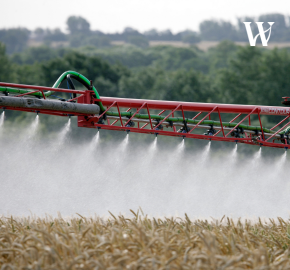
Surface water runoff within catchments is another key contributor. These include plastics from tyre fragments and agricultural waste which are washed into rivers where they accumulate and further degrade the environment.
The types of particles, as well as flow dynamics and the substrate composition of a river, play key roles in what happens to plastics once in the system (Sulaiman, Woodward, and Shiels 2023). Heavier and larger microplastics are more likely to be held in an area, while smaller and lighter particles are more easily dispersed. Equally, heavier flows are more likely to push microplastics downstream, while low flows will lead to greater deposition in the riverbed.
Either way, both plastic accumulating in the sediment or those suspended in the water column have the potential to cause harm to the wildlife living in our rivers, and indeed ourselves.
Fixing the problem
Arguably the most famous example of plastic pollution in the natural world is the Great Pacific Garbage Patch. A conglomeration of plastic waste three times the size of France and visible from space. However, research conducted in the UK by Greenpeace in 2019 demonstrated that a stretch of the River Mersey was, proportionally, more polluted than the Great Pacific Garbage Patch.
Clearly, the issues we have with plastic pollution in our rivers are extensive and recognising this is important. There are several ways we can tackle plastic pollution including:
1. Action by polluters to limit entry
Water companies need to act to mitigate entry through wastewater pathways and their own processes. Other industries including the agriculture sector also need to be held accountable for waste production and encouraged to source more environmentally responsible materials.
2. Improve recycling and reuse
More plastics need to be recycled and reused. Landfill sites also need to be well managed.
3. Changing consumer habits
Making decisions to reduce our reliance on plastic when we can is important, particularly for single-use items. We need to reduce the production and circulation of these materials, as well as our reliance on the disposal systems in place to remove them.
Ultimately, we need to turn off the plastic tap. Doing so will give aquatic habitats, wild fish populations and other water-dependent wildlife the chance to recover.
Content notes:
- European eels breed in the Sargasso Sea before juveniles return to freshwater habitats to mature (catadromous). Atlantic salmon on the other hand breed and develop in freshwater before returning to the marine environment to fully mature (anadromous).
- These may have been introduced during the manufacturing process or have bound to the plastics in high concentration from the surrounding environment.
- These can be subdivided into two further categories: primary microplastics which are manufactured to be a small size and secondary microplastics which are those degraded from larger material.
- Where a wastewater treatment works or combined sewage overflow releases untreated effluent during periods of little or no rain. An illegal practice.
List of references
Leslie, H. A., van Velzen, M. J. M, Brandsma, S. H., Vethaak, A. D., Garcia-Vallejo, J. J., Lamoree, M. H. (2022), Discovery and quantification of plastic particle pollution in human blood, Environment International, (163) 107199.
Hannah Ritchie (2021) – “Where does the plastic in our oceans come from?” Published online at OurWorldinData.org. Retrieved from: ‘https://ourworldindata.org/ocean-plastics’ [Online Resource]
Ocean Cleanup (2025) https://theoceancleanup.com/faq/what-are-microplastics-and-macroplastics-and-why-may-they-be-harmful/#:~:text=Microplastics%20are%20plastic%20objects%20smaller,risk%20of%20harming%20the%20environment.
DEFRA (2018) https://www.gov.uk/government/news/world-leading-microbeads-ban-comes-into-force
Woodward et al, 2021. Acute riverine microplastic contamination due to avoidable releases of untreated wastewater
Sulaiman, Woodward, and Shiels (2023) Riverine microplastics and their interaction with freshwater fish.
Windsor et al 2019 Microplastic ingestion by riverine macroinvertebrates
Haegerbaeumer et al, 2019 Impacts of Micro- and Nano-Sized Plastic Particles on Benthic Invertebrates: A Literature Review and Gap Analysis
Ghosh et al, 2025. Exploring the ecotoxicological impacts of microplastics on freshwater fish: A critical review.
By: Dr. Sam Green
Senior Freshwater Ecologist