In an important ruling for transparency, the Tribunal has dismissed an appeal by Soil Association Certification, clearing the way for disclosure of inspection reports relating to salmon farms it certifies as “organic”. The move improves public accountability and directly challenges greenwashing in the sector.
In this blog, Scotland Director Nick Underdown explains why the ruling matters, what it means for so-called “organic” salmon and importantly, what you can do to ensure organic labels stand up to public scrutiny.
The ruling explained
The ruling by the First Tier Tribunal of the General Regulatory Chamber confirms that Soil Association Certification Ltd, which inspects and certifies salmon farms as “organic”, is carrying out public administrative functions and must therefore comply with environmental information law. As a result, the inspection reports that we first requested back in 2024 will now have to be disclosed. The ruling is an important win for transparency – and a vital step towards properly scrutinising the claims being made about so-called “organic” farmed salmon.
In 2024, we asked Soil Association Certification for copies of inspection reports relating to Scottish salmon farms that it certifies as organic. We made that request because organic certification is repeatedly used by the salmon farming industry as evidence of environmental responsibility – despite ongoing concerns about sea lice, chemical pollution, fish escapes, and wider harm to wild salmon and the marine environment. Soil Association Certification then passed the request to Defra, which provided to us only summaries of the site inspections, not the reports themselves and told us they did not hold the data. We therefore repeated our request to Soil Association Certification for the data.
Rather than disclose the reports, Soil Association Certification argued that it was not a public authority and therefore did not have to comply with the Environmental Information Regulations (EIR). We asked for a review of that decision and the Information Commissioner’s Office agreed with us and ruled that the information must be released.
Instead of complying with that decision, Soil Association Certification chose to appeal. Last week, the First-tier of the General Regulatory Tribunal dismissed that appeal in full.
Why the ruling matters
The Tribunal found that Soil Association Certification is not acting like an ordinary private company. Because it has been granted delegated powers by Defra to certify food as organic – including the power to grant, suspend or withdraw certification – it has “special powers” and is carrying out public administrative functions.
The tribunal observed that: “SA Certification, which has been entrusted with the performance of services of public interest, inter alia in the environmental field, has been, for this purpose, vested with special powers beyond those which result from the normal rules applicable in relations between persons governed by private law.”
In basic terms: if a body has the power to decide whether a product can legally be sold as “organic”, it must also be accountable and transparent.
The Tribunal described Soil Association Certification’s role as akin to a licensing function, providing a gateway to the lawful marketing of organic products. Companies cannot simply “shop around” for a more permissive certifier, and certification decisions have real legal and commercial consequences.
That means inspection records are environmental information held by a public authority – and the public has a right to see them.
Read the Tribunal's full ruling here
Transparency of information shouldn’t need a fight
This case was never about technicalities for their own sake. It was about a simple principle: if environmental claims are being made to consumers, they must be open to scrutiny.
Inspection reports go to the heart of whether organic standards are being met in practice, how non-compliance is handled, and whether certification is delivering what people think it means.
Instead of helping to clarify what is happening on the salmon farms it certifies, Soil Association Certification chose to resist disclosure all the way to the Tribunal. That decision has now been firmly rejected.
We now await full disclosure of the inspection records originally requested in 2024. Our team will analyse these details carefully and share what they reveal.
What this means for “organic” salmon
This ruling lands at a crucial moment.
The Soil Association is currently reviewing its organic standards for farmed salmon and has launched a public consultation on the future of the scheme. That review comes against a backdrop of growing concern – including from former Soil Association trustees and long-standing supporters – that organic certification of open-net salmon farming is simply not credible.
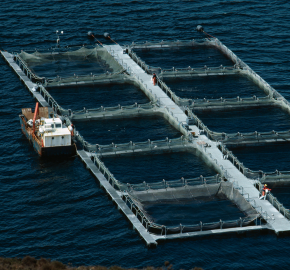
The environmental impacts associated with open-net salmon farms are systemic, not incidental. Certification cannot fix a production model that releases pollution, parasites and disease directly into the marine environment, endangering the survival of wild fish populations.
Transparency is a minimum requirement. But transparency alone cannot make the indefensible defensible.
Take part in the consultation
If you care about the issues raised in this blog, we encourage you to take part in the Soil Association’s consultation before it closes on Sunday 15 March 2026.
You do not need to answer every technical question to make your voice heard.
We’ve prepared one clear message (below) that you can use in your response:
“I do not believe that organic certification of farmed salmon is defensible. Open-net salmon farming routinely involves systemic problems such as parasite outbreaks, high mortality rates, and the use of antibiotics and chemical treatments that are inconsistent with the fundamental principles of organic production.”
You can tailor this message to your own experience or interests, and might consider including that:
- open-net salmon farming is prone to chronic sea lice infestations and disease that often require routine antibiotic and chemical treatments;
- these treatments — including even those permitted under current “organic” standards – are released into the marine environment and have wider ecological impacts;
- high and unpredictable mortality rates on Scottish salmon farms remain a persistent problem;
- and the cumulative impacts of these features sit uneasily with the principles of ecology, health, animal welfare, and care that organic standards are meant to embody.
A short response with these points clearly stated will ensure your voice is counted – even if you do not engage with every individual question in the consultation.
Follow the link below, to take part in the consultation today:
Take part in the consultation
What happen’s next?
Organic labels only mean something if they can stand up to scrutiny. This ruling makes clear that scrutiny is not optional. Over the coming weeks:
- Inspection reports will now be disclosed
- WildFish will analyse and publish findings in the public interest
- We will submit our own formal response to the standards review
- We will continue to challenge greenwashing wherever it occurs
Stay tuned for more on this and our work to protect wild fish from the impacts of open-net salmon farming.
By: Nick Underdown
Scotland Director