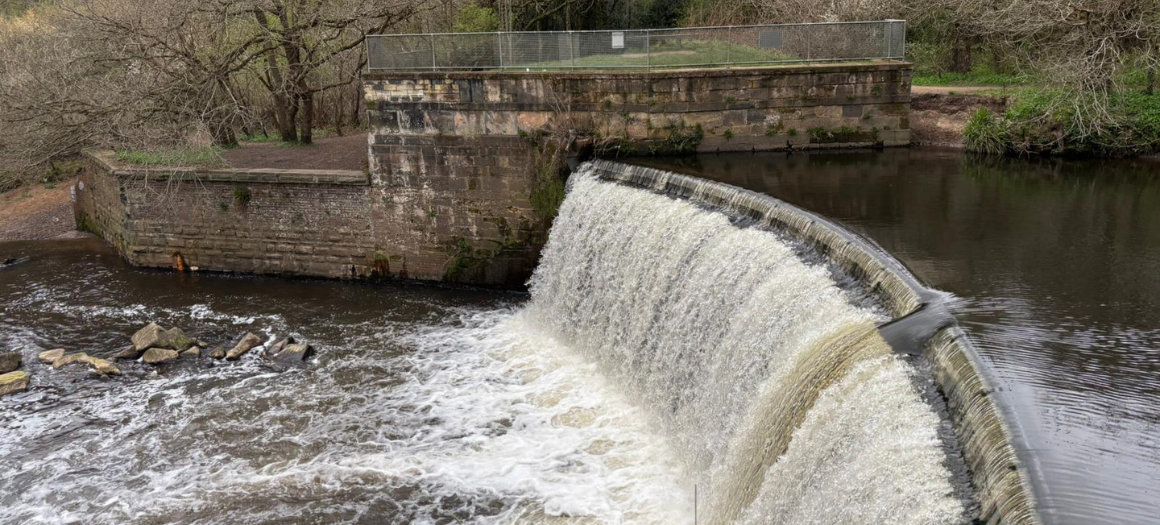
The UK’s rivers should be lifelines for wildlife – dynamic, connected systems that allow fish to move freely between the habitats they need to survive. Instead, most of our rivers are fragmented by thousands of artificial barriers: weirs, dams, culverts and other structures that interrupt natural flows and block fish movement.
This fragmentation is one of the most significant pressures on wild fish populations today. We believe restoring river connectivity – primarily by removing redundant barriers – is one of the most effective and cost-efficient actions we can take to rebuild healthy freshwater ecosystems.
A nation of fragmented rivers
River fragmentation in the UK is extensive. Only 1% of rivers are completely free of artificial barriers, and just 3.3% of the river network allows unrestricted movement of aquatic species. Across Great Britain, there are an estimated 0.75 barriers per kilometre of river, creating a heavily disrupted landscape for wildlife.
Most of these barriers are relatively small in size – often less than a metre high – but their ecological impact is anything but small. Fewer than 1% of barriers have fish passes, meaning most remain significant obstacles to fish movement.
Why connectivity matters for wild fish
All fish species need to move within river systems at different stages of their lives – to spawn, feed, find shelter and maintain healthy populations. When rivers are fragmented, fish populations become isolated, reducing genetic diversity and increasing the risk of local extinction.
For migratory species, the consequences are even more severe. Atlantic salmon, sea trout and European eels depend on unobstructed routes between freshwater and the sea to complete their life cycles. Barriers that block or delay migration reduce breeding success, limit access to high-quality habitat and increase stress and mortality.
Importantly, it’s not just large dams that cause problems. Research shows that small barriers can reduce successful fish passage by 50–80%, and when multiple small barriers occur in sequence – common in urban and lowland rivers – their cumulative effect can be devastating. A river with many minor obstacles can be more impassable than one with a single large barrier.
Barriers don’t just block fish
River barriers affect far more than fish movement. By altering natural flow patterns, barriers trap sediments upstream and starve downstream habitats of nutrients. This disrupts invertebrate communities and degrades spawning gravels used by fish.
Barriers trap pollutants, which accumulate in sediments behind structures. These contaminants can remain locked in place for decades, degrading water quality and posing long-term risks to wildlife.
Barriers also influence river temperature. Many small weirs and impoundments release warmer surface water, raising downstream temperatures. For cold-water species like salmon and trout, even small increases in temperature can reduce survival, increase disease risk and worsen the impacts of climate change.
Removal works – and it works fast
When it comes to restoring rivers, the evidence is clear: barrier removal is the most effective solution. Removing redundant or obsolete structures restores natural flows, reconnects habitats from source to sea and delivers rapid, measurable ecological recovery.
Studies and restoration projects consistently show that fish populations respond quickly once barriers are removed. Spawning habitat is recolonised, sediment movement improves, water quality stabilises and biodiversity increases – often within just a few years.
Fish passes are essential where removal is not feasible, but are rarely fully effective. Even well-designed passes do not allow all fish to pass, and many species or life stages struggle to use them. By contrast, complete removal restores the river for all species.
A cost-effective investment in nature and people
Barrier removal is also one of the most cost-effective ways to restore river health. Compared to ongoing maintenance of ageing infrastructure or complex mitigation measures, removing redundant barriers provides long-term benefits with minimal future costs.
Healthy, free-flowing rivers don’t just benefit wildlife. They improve water quality, reduce flood risk and enhance landscapes. As climate pressures increase, resilient river systems will be essential for both people and wildlife.
Reconnecting rivers for the future
The science is clear: fragmented rivers are failing wild fish. By prioritising the removal of unnecessary barriers, we have a powerful opportunity to reverse decades of damage and restore thriving freshwater ecosystems across the UK.
Reconnecting rivers is not just about fixing the past, it’s about securing healthy rivers, abundant wildlife and resilient landscapes for future generations.
WildFish want to see:
- Barriers removed wherever possible. We need dedicated funding and a strategic plan for barrier removal – where the most ecologically damaging barriers are prioritised first.
- Ambitious targets and legislation to achieve this. The EU’s Biodiversity Strategy 2030 has set the goal of achieving 25,000 km of free-flowing rivers by 2030. A guidance document to accompany this target ‘Barrier Removal for River Restoration’ addressed the definition of free-flowing rivers, gave guidance on site selection and prioritisation of barriers and an overview of possible financing instruments. Good progress has been made – in 2024 more than 2900km of river connectivity was restored (including barriers removed in the UK). However, as we are no longer part of the EU, the 2030 Biodiversity Strategy is no longer a binding policy, and its replacement, the UK National Biodiversity Strategy and Action Plan (NBSAP) has no specific mention of river barriers or a UK target for restoring river connectivity.
Where removal is not possible, fish passage is essential. The government must introduce the draft Fish Passage Regulations, which are designed to deal with historic barriers. These have been waiting since 2009 to become law.
By: Dr. Janina Gray
Head of Science and Policy