WildFish has released a startling new report compiled from files obtained by freedom of information requests to the Environment Agency (EA), which reveals that more than half of the invertebrate river health assessments by the EA have been relying on outdated data.
Our analysis of the Agency’s data for its river monitoring during 2019 shows 52% of invertebrate assessments in England were recycled from past data and not newly assessed. While 3,645 water bodies were ‘assessed’ in that year, only 1,781 had new monitoring while the rest were assessed using only ‘rolled over’ data from the previous cycle.
Invertebrate monitoring is a key part of assessing a river’s ecological status, as different invertebrate groups have known sensitivities to pollution and habitat change. It is seen as a vital tool in managing England’s river health via the Water Framework Directive (WFD) – an EU-wide initiative to help water bodies reach good ecological status and prevent deterioration. The WFD relies on robust, up-to-date monitoring, which is currently collected exclusively by the EA.
But our report’s findings uncover the EA’s widespread reliance on ‘rollover’ data which is outdated and potentially inaccurate. Regions with the highest percentage of data rollover were the South West (63.1%), the South East (62.6%), and the Humber (54.0%), while the Anglian had the lowest percentage (39.9%).
If this trend continues, then projections show that some assessments for 2025 will use rollover data that has previously already been ‘rollover-ed’ once before – resulting in catchments being assessed using monitoring data that’s nearly a decade old.
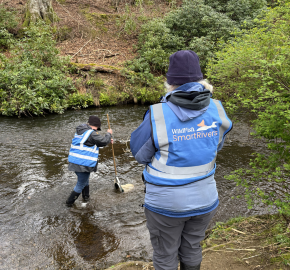
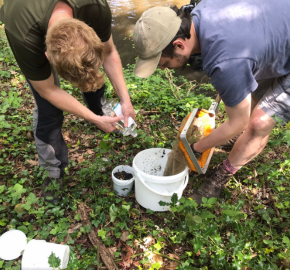
As a result of the report, we want to highlight the importance of data collected by citizen science projects across the country, which could help plug the monitoring gaps of a cash-strapped EA.
Dr. Sam Green, Senior Freshwater Ecologist at WildFish, said: “We can only take action to save Britain’s rivers when we know what’s going on under the surface – and so a lack of up-to-date monitoring and a reliance on rollover data from previous years is deeply concerning”.
While the EA evidently needs more money and more resources to carry out more sufficient river monitoring, the Agency could also vastly reduce its current reliance on rollover data by including professionally analysed data from national citizen science programmes like SmartRivers. SmartRivers alone has years’ worth of industry-standard data collected bi-annualy on rivers including sites where the EA currently appears to be using rolled over data from 2016 for a 2025 classification.
Dr Janina Gray, Deputy CEO at WildFish, added: “The public and those who work to protect our rivers I think will be surprised and dismayed to find out the data used by regulators to assess our rivers is so out-of-date. Protecting our rivers starts with us all working together to ensure we have transparent, accurate, and current data that can be used not only to identify environmental stressors but also track progress. It’s time the EA prioritises collaborations with citizen science projects, such as SmartRivers, to help fill some of the EA’s knowledge gaps”.
Follow the link below to read the full report:
Read the report





Following viewing “Dirty Business “ the Environment Agency is completely discredited and should be called to account in Parliament along with the water companies. A totally disgraceful gang of liars and criminals.