The Court of Appeal has just given its judgment in our case of WildFish v Buckinghamshire, Wilson Homes and Anglian Water, standing by the ruling of the High Court overall, but clarifying that the sewage capacity plans for a development in Buckinghamshire must be sorted out before the development goes ahead.
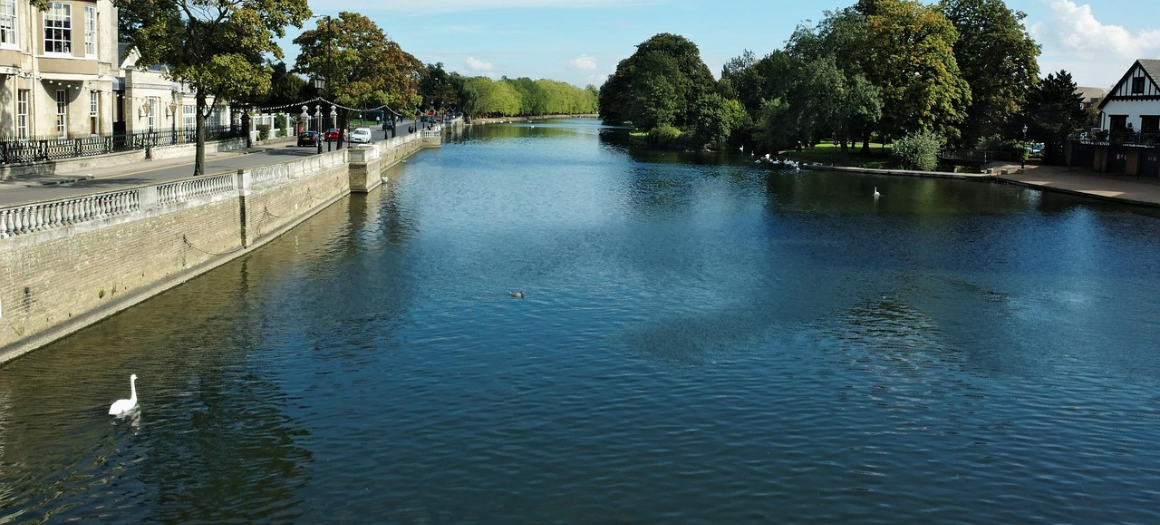
The case comes at the end of a year-long struggle. On 4 March 2025, Buckinghamshire Council signed off on conditions for a massive housing development in Maids Moreton, a village outside Buckingham. The local sewage works is presently struggling to keep to its permit limits and Ofwat have refused to sign off on investment for upgrades for Anglian Water. That means that sewage could pour into the Great Ouse, one of the longest rivers in England with Ramsar sites, Special Protection Areas, Special Areas of Conservation and Sites of Special Scientific Interest.
In May 2025, we launched a judicial review challenge against a type of planning approval (“reserved matters approval” or “RMA”) which deals with sign off for conditions on a planning permission. We said the approval seemed to allow the development to proceed despite the lack of investment and switched a stronger planning condition on sewage capacity for a weaker one.
We spent 3 days in court in October 2025. The case is highly technical and involved discussions of what the council had in fact approved as there was no proper clarity. The judge then decided to dismiss our judicial review challenge. But we were granted permission to appeal to the Court of Appeal on the basis that we had good grounds for challenging the High Court decision.
Now the Court of Appeal has provided its judgment, standing by the High Court’s decision, but with different reasons. In an absolutely crucial clarification, the court ruled that:
- The condition which the council thought it had amended is still a “pre-commencement” condition, meaning that the developer cannot start building until a foul water drainage scheme for the site has been approved along with a proper assessment of capacity to identify infrastructure upgrades and a programme of works. The condition would also now need to be approved (“discharged”) in full.
- Although the court did not in the end deal with whether the council could transfer one weaker amended condition (out of time for approval) to another planning permission, the Court of Appeal clarified that the council had not swapped conditions.
- The court also contradicted the view of the Council that it had two different planning approvals from which to choose.
- The corollary of this was that the council’s and the developer’s position that development could start without the necessary upgrade to the sewage works was wrong. That means in the end that there is better protection for the environment.
Justin Neal, solicitor at WildFish said, “This has been a long, hard fight to stand up for the principle that capacity at the sewage works must be resolved before building commences. Although we lost on the technicalities, the judgment clarified that, despite what the council and the developer thought, the stronger, original planning condition still remains intact. That means that the high-level of protection now remains and other councils will need to think twice before seeking to water down their conditions in the same way.”
He added, “The case also demonstrates that there is no proper alignment of sewage capacity and development. The responsibility has been passed to over-stretched councils to ‘regulate’ via planning conditions, under pressure from developers and with unconcerned water companies that go scot-free for polluting rivers because they don’t have capacity at their works, knowing that in the end they get paid by their customers whatever gets discharged into the river.”
Nick Measham, CEO of WildFish commented, “With small changes to the legislation, water companies could easily be forced to ensure that there is capacity provided to treat sewage from new developments and that planning permission be refused where there is not. It is clear, after the enormous amounts of time spent on an inquiry by the Commission for Water, that not enough attention has been paid to more practical and quicker solutions than the wholesale rewriting of the law, the demise of Ofwat and the slow and expensive creation of the single economic and environmental watchdog.”







I want to know whether there is now an argument that conditional permission dependent on sewage treatment cannot be deferred to stage 2. I need to see the judgment of the CA. Please send it , the CA judgment to my email address. Thank you.
Roger
Thank you and well done!