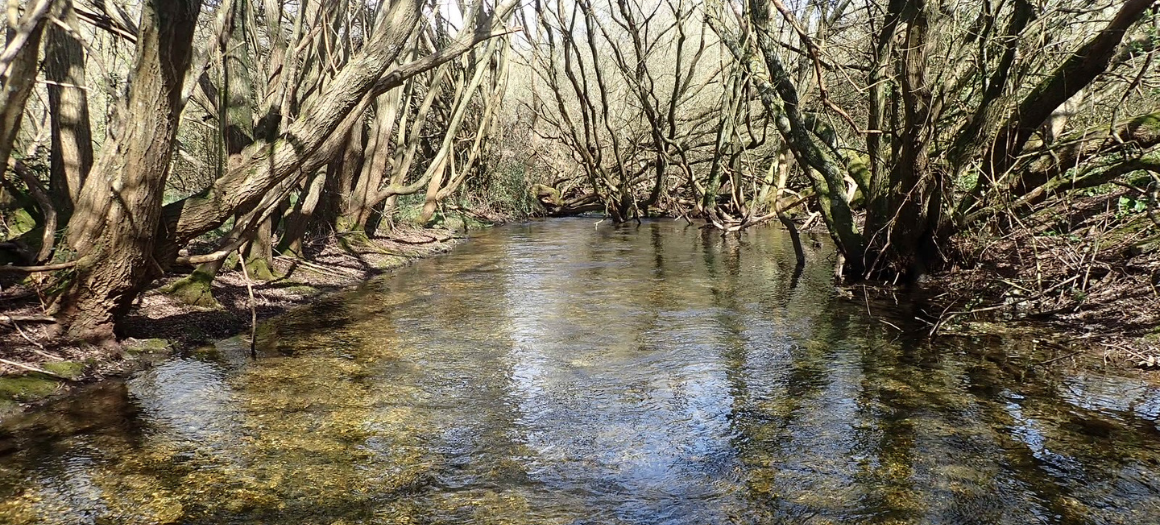
A rare and globally scarce lowland river fed by underground water, the River Ems chalkstream flows from its source in West Sussex to Emsworth before crossing into Hampshire, where it empties into Chichester Harbour. Along its short 9 km range, it faces a disproportionate number of pressures, putting the river and its wild fish populations at risk.
In an interview with Sandy Galloway, founding member of Friends of the Ems and SmartRivers group lead, we journeyed down this rare and diverse chalkstream, unpicking the threats and discovering why this river, like so many across the country, urgently needs better protection.
Before you dive in, will you sign our handraiser and join thousands calling on the government to reconnect rivers, like the Ems, and give wild fish a fighting chance? It takes 30 seconds.
Yes - I want to reconnect rivers
Now, it’s over to Sandy from Friends of the Ems…
WildFish: The Ems is your local river, one you fight hard to protect. Describe how we would find it today?
Sandy Galloway: The Ems is a complex and heavily modified watercourse.
As it meanders through West Sussex from its source at Stoughton, several man-made barriers obstruct its flow. Historically, the river supported at least four, possibly five watermills, extensive water meadows and three watercress ‘farms’, as well as trout and eel fisheries.
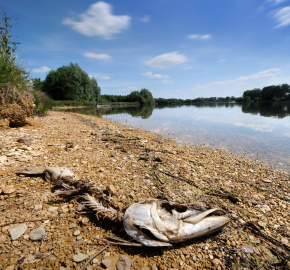
Wildlife is in decline along the river. Worryingly, data from Holmes suggests an increasing loss of biodiversity. Particularly concerning is the 75% decline of the previously resilient brown trout population. There has also been a significant recorded fall in eel and bullhead numbers.
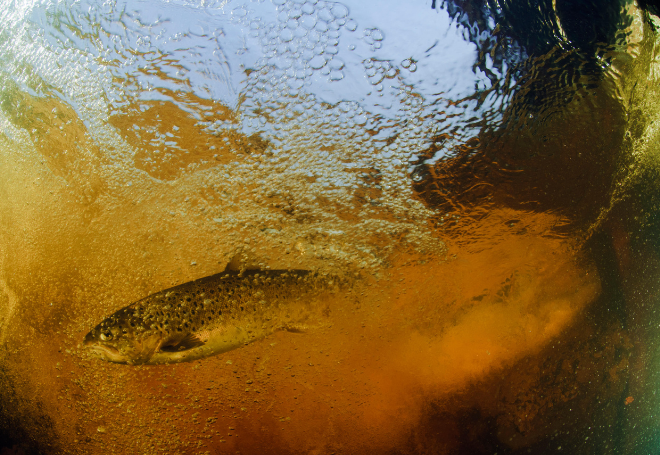
Image 01: worryingly, brown trout populations on the River Ems have declined by 75%. ©Alamy
WildFish: As someone who spends a great deal of time understanding the river, what do you think are its biggest threats?
Sandy Galloway: With the River Ems, we have learnt that in whatever way we interfere with flow, the river becomes increasingly vulnerable.
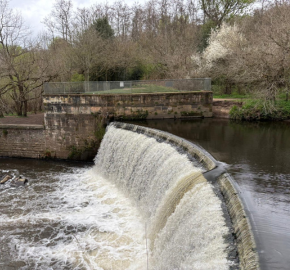
River barriers are a significant concern on the Ems. There are several artificial structures designed to control the flow of the river, including dams, weirs, sluices and gates – all structures developed to divert, contain flow and harness its energy.
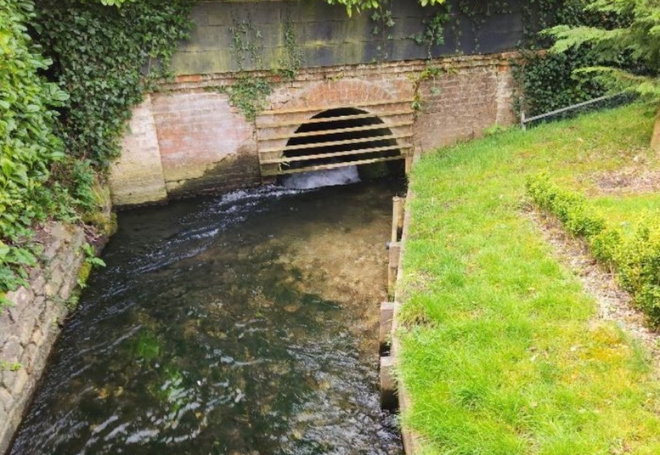
Image 02: barriers like this one litter the River Ems, fragmenting the river and limiting wild fish movement. ©SandyGalloway
My experience with the Ems has also taught me that some barriers are more subtle and not cast in concrete or constructed with wood, such as the over-abstraction of water. These are rapidly coming into focus with our changing climate, resulting in notably higher temperatures and changing rainfall patterns.
On the Ems, over-abstraction has been a significant obstruction to the normal movement of the river’s wild fish populations.
WildFish: Thinking about barriers, a notable cause of wild fish decline, can you talk us through how these have altered the flow of the river?
Sandy Galloway: Like many rivers, the Ems has been subject to significant anthropogenic events throughout its challenging history, and today we are seeing the cumulative impact of this. To explain it best, we need to understand how the river has changed over time from its source.
The river flows from springs on the coastal side of the South Downs. These springs discharge at varying points within the catchment depending on the groundwater levels.
North of Westbourne village the river was previously diverted west, later to be modified as a water meadow, with the typical bedworks, carrier channels and drains. This activity destroyed much of the natural river structure.
The diversion also brought the main river and a significant tributary (the Aldsworth Stream) together into a canal-like reservoir providing a water supply to the nearby property and a water mill. With this came various sills, sluices and one of two mill leats. One of these serves as a carrier channel for another area of water meadows below Westbourne. On the south side of Westbourne, there is a demolished mill site. This has a sluice controlling flow and a more recently constructed (mid 1980s) but failed inverted siphon (a type of culvert used to direct water under infrastructure using gravity and internal pressure) to transport water under the A27. In effect, creating a totally blocked waterway!
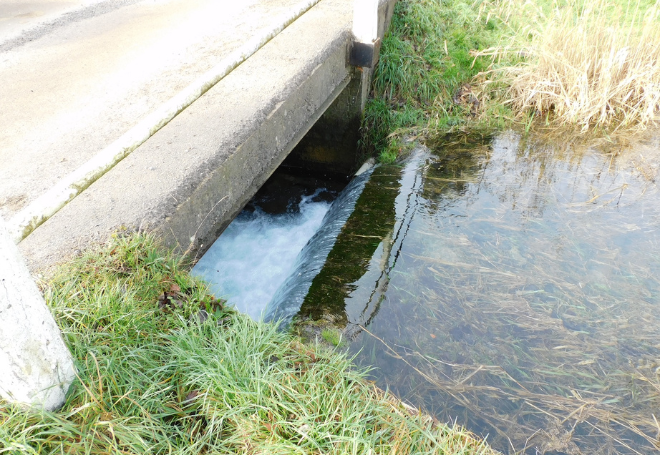
Image 03: This inverted siphon on the River Ems effectively creates a blocked river for wild fish who would struggle to navigate this artificial structure. ©Sandy Galloway
At the bottom of the catchment, the river is further divided. One limb flows into a tidal mill pond where the converted redundant mill remains. The mill pond has remaining tidal gates which are now only open at a few spring tides for de-silting purposes. An opportunity for a few migratory fish to enter the river despite low flows and the many barriers that stand in their way, including two significant penstocks (a closed pipe or sluice gate used to control, direct or stop the flow of water).
The second limb of the lower river flows through a canalised waterway and a moderate weir, maintaining the water level within the property and gardens through which it flows. It runs under an old redundant corn mill with a large grill to stop tidal debris from obstructing existing river flow.
WildFish: Water abstraction is another significant concern on the River Ems, and in September 2020 the middle reaches ran dry. Tell us how this worrying advancement in environmental decline sparked local action?
Sandy Galloway: Until that point there had been surprisingly little public concern about the river, other than a tacit acceptance of drying in the upper reaches and significantly reduced flows during summer months.
The events of 2022 were a catalyst for the formation of the Friends of the Ems, a small group of riparian owners and worried observers from the local community. At the time, we knew little about the history of the river and even less about the complexities of the hydrology. Fast forward four years, and we are now well-versed in the complex and challenging history of the Ems.
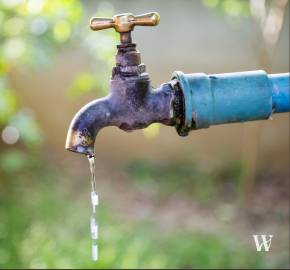
Over-abstraction is an area of continued concern for the group, particularly Portsmouth Water’s dependence on the river to meet public supply.
The continued drive to source more water from the river underpins the increased abstraction from the aquifer leading to the reduced flows and the likely development of the ‘new layer’ of obstruction to a healthy river habitat.
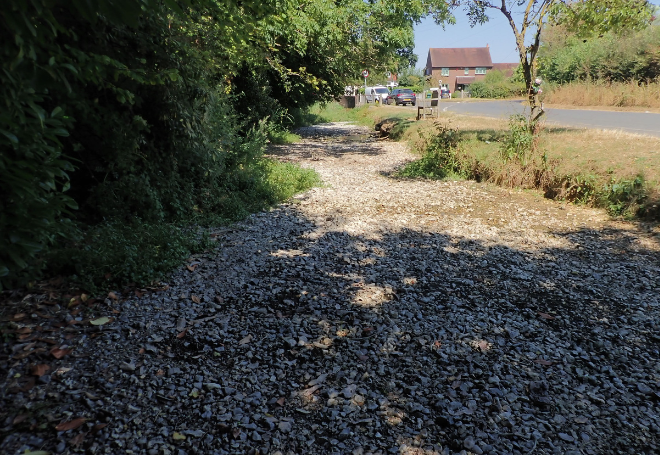
Image 04: This is Aldsworth stream, a significant tributary of the River Ems. Drying like this is an increasingly common reality in the UK, and is fuelled by water companies’ failure to invest in infrastructure to capture, store and recycle water. ©Sandy-Galloway
The current abstraction licence expires at the end of March 2028. It is essential that the Environment Agency secures a sustainable abstraction regime following the scheduled licence review and even then it may be too late to prevent irreversible decline. Based on the ability of the local aquifer to recharge there would need to be a 75% reduction in abstraction and to achieve a high environmental ambition as defined by the Environment Agency the reduction would need to be 100%.
By: WildFish x Sandy Galloway