Invasive species are one of the major threats to global biodiversity. They are thought to have played a role in around 60% of global plant and animal extinctions, and their annual global economic cost exceeds £300 billion – a figure that continues to rise. However you interact with nature, being wary of invasive species is an issue of real importance (IPBED, 2023).
Freshwater systems are particularly vulnerable to invasion, a threat we see all too often in the UK. Rivers act as natural dispersal corridors, allowing species to access wide areas of habitat and resources. This connectivity also makes controlling their spread especially challenging. Compounding this, the degraded condition of many freshwater habitats increases the likelihood that invasive species will successfully establish populations.
Invasive and non-native species explained
Non-native species are organisms that have been moved outside their natural geographic range, either intentionally or accidentally, through human activity. Most non-native species are considered benign or even beneficial, particularly where they deliver a commercial benefit. It is only a minority that causes problems.
There are over 3,000 non-native species recorded on the Great Britain Non-Native Species Information Portal. Of those, just over 2,000 have established breeding populations in the wild (becoming “naturalised”), but only around 300 have been designated as invasive species (NNSS, 2020). It’s this 10% that we need to be the most concerned about.
Invasive and non-native species are those that can breed in the wild, spread rapidly into new areas, and cause negative ecological, economic, or human harm.
Over the last 50 years, invasive species have become increasingly prevalent across freshwater, marine, and terrestrial habitats in the UK. In freshwater alone, 14 invasive species have populations present in more than 10% of available habitat, with some thriving across over half of the country (JNCC, 2025). This figure excludes terrestrial and marine invasive species that also exert significant impacts on freshwater ecology. Examples include Himalayan balsam (Impatiens glandulifera) along riverbanks or Chinese mitten crabs (Eriocheir sinensis) that have migrated upstream from the estuaries.
The impact of invasive species on freshwater habitats
In rivers, invasive species do not simply replace one organism with another; they can fundamentally alter ecosystem structure and function. Habitat damage is often one of the most visible impacts.
Invasive crayfish, for example, can burrow into and destabilise riverbanks, accelerating erosion and increasing sediment loads in the water column. These sediments can smother gravels that are critical habitats for native fish and invertebrates.
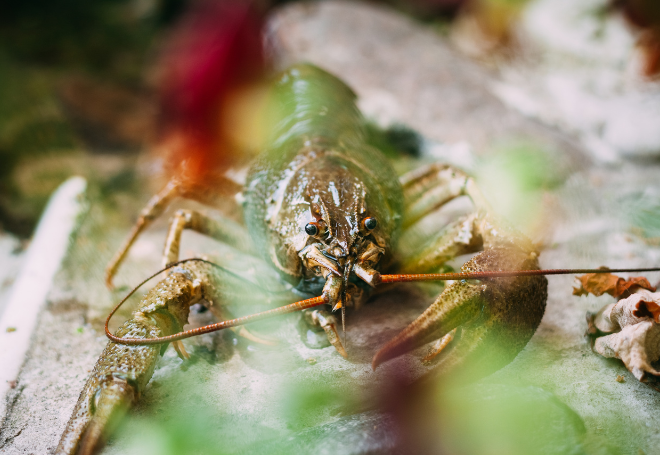
Image 01: Signal crayfish were first introduced to UK waters in the 1970’s and have since spread prolifically.
Aquatic invasive plants are another example and can spread rapidly. These plants choke river channels, alter flow patterns, and reduce habitat diversity. Dense growth traps fine sediments and organic matter, further degrading river structure and water quality.
Food webs are also disrupted as invasive species change the abundance, diversity, and composition of native communities. These shifts can reduce the availability of key prey species and interfere with wider ecosystem processes, with knock-on effects throughout the food chain. Disease, competition, and predation can add further strain.
Crucially, these pressures rarely act in isolation. Invasive species interact with pollution, habitat loss, altered flows, and climate change, compounding impacts that native species are already struggling to withstand and pushing degraded rivers further from recovery.
Examples of Invasive Species
The distinction between native and invasive species can blur where species have been present for longer than living memory. Read on for examples of the well-known invasive species in UK freshwater habitats, as well as newer invaders and species of future concern.
Fishy Tourists
1. Common carp (Cyprinus carpio): Introduced to the UK from mainland Europe (likely originating from the Danube) by medieval monks in the 14th or 15th century as a food source. Today, carp are widespread across the country, particularly in the still waters of southern England. Despite their familiarity, common carp can have significant ecological impacts. Their feeding behaviour and physical disturbance negatively affect aquatic plants and invertebrates, while sediment disturbance can increase turbidity and nutrient loads, degrading water quality.
2. Zander (Sander lucioperca): Another long-term resident, the zander is a predatory fish native to much of western Eurasia. First introduced to the UK in 1878, it spread rapidly through East Anglia in the 1960s and is now established in many rivers and canal systems. As a top predator, zander negatively affect prey fish populations, particularly cyprinids, and compete with native predatory species.
3. Topmouth gudgeon (Pseudorasbora parva): This species is of special concern. A small ornamental fish from East Asia which was first introduced in the 1980s associated with Crampmoor Fishery, a facility in Hampshire that was also linked with the release of the invasive sunbleak (Leucaspius delineates). The topmouth gudgeon is highly invasive and competes with native fish species for food, territory, and spawning habitat. They can form high population densities and deplete invertebrate and planktonic communities, as well as predating fish eggs. The Environment Agency aims to eradicate this species completely with the INNS management team working with fishery owners to remove known populations.
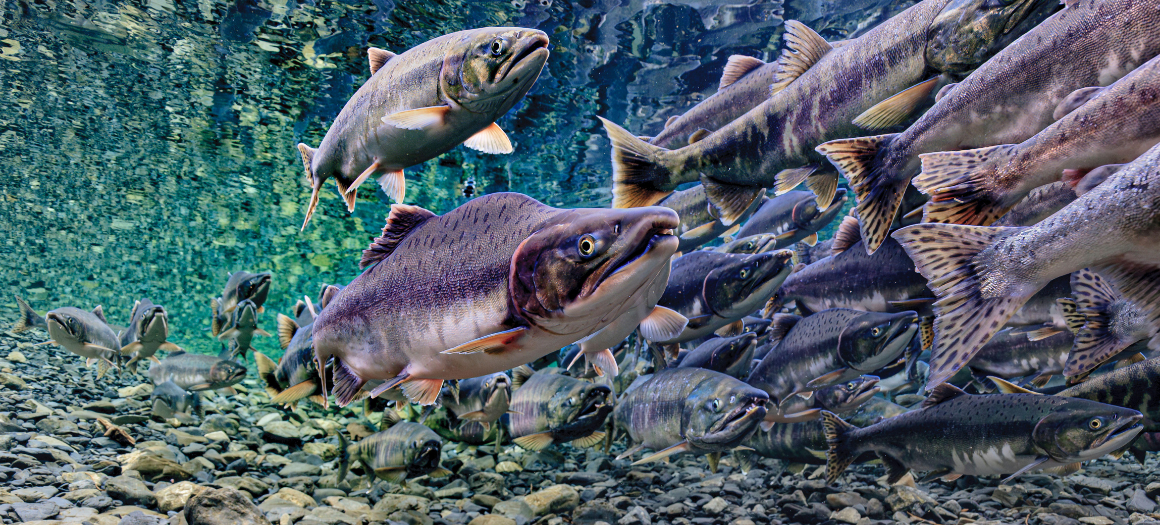
4. Pink salmon (Oncorhynchus gorbuscha): Another species to watch out for, the pink salmon is native to the North Pacific and was first introduced to north-western Russia in the mid-20th century to create a commercial fishery. Since then, it has spread westward, colonising rivers in northern Norway and reaching the UK. First recorded in Scotland in the 1960s, it has since been found across several catchments, from Scotland and north-east England to as far south as the River Tamar in Cornwall (Environment Agency, 2025). Recent evidence suggests successful spawning in Scotland, raising concerns about wider dispersal in the future. Pink salmon compete with, and show aggressive behaviour towards, our endangered native Atlantic salmon. In 2023 pink salmon outnumbered Atlantic salmon considerably in northern Norway (Dunmall et al, 2025). Linked to these high population densities is a water quality issue, as the species dies on mass after completing its two-year life cycle and spawning. This will add a significant nutrient load to systems which do not naturally function in this way. The pink salmon has been identified as one of the top 20 species likely to become invasive in the UK during the next decade (NNSS, 2025).
Invertebrate Invaders
1. Signal crayfish (Pacifastacus leniusculus): Perhaps the most notorious invasive freshwater invertebrate in the UK is the signal crayfish. Introduced from North America in the 1970s for aquaculture, it rapidly escaped into the wild and spread widely. Signal crayfish outcompete native white-clawed crayfish (Austropotamobius pallipes) and carry a crayfish plague, which has driven native populations towards extinction. On top of that, the species negatively affect wider invertebrate biodiversity through predation and their deep complex burrow systems destabilise riverbanks.
2. Shrimp species: Another diverse group of invaders in UK rivers are shrimp species. The Northern river crangonyctid (Crangonyx pseudogracilis) was likely introduced with plant material from North America in the 1930s and is widespread, particularly in England and Wales. Despite its prevalence this species is generally thought to be fairly environmentally benign, even being predated by our native shrimp (Gammarus pulex). It is however more tolerant of pollution and poorer water quality so can replace native shrimp populations in those areas. The killer shrimp (Dikerogammarus villosus) and demon shrimp (Dikerogammarus haemobaphes) have a different story. Native to the Ponto-Caspian region, they were first recorded in the UK in 2010 and 2012 respectively. Both are highly aggressive, killing native shrimp and predating a wide range of invertebrates, fish eggs, and fry. Demon shrimp currently have the wider distribution, but both pose serious ecological challenges to the catchments they are found within.
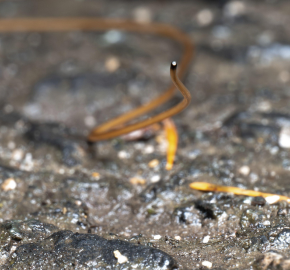
3. Salmon fluke (Gyrodactylus salaris): Another species identified as one of the top 20 most likely to become invasive in the next decade. This small parasitic flatworm evolved alongside isolated populations of Atlantic salmon native to the Baltic Sea. On its usual hosts, infections rarely cause significant harm. However, when the parasite infects salmon from outside its native range, the effects are very different: without the appropriate immune response, host mortality is often high. When salmon fluke was introduced from Sweden to Norway in the 1970s, it rapidly colonised rivers and caused catastrophic losses in wild salmon populations. Although currently absent from UK rivers, it has been introduced to several European countries, raising serious concern about the consequences for UK salmon populations should it be accidentally introduced.
Problematic Plants
1. Himalayan balsam (Impatiens glandulifera): With beautiful pink flowers and excitable seed pods, Himalayan balsam will be a familiar sight to many that spend time by rivers. Native to the Himalayas, balsam is an ornamental relic of Victorian botanists that was first introduced to the UK in 1839 and now lines the banks of rivers across much of the country. It is a species of special concern. It forms dense monocultures that shade out native plants in the summer months. When these monocultures die back in winter the riverbanks are left barren and exposed leaving them more vulnerable to erosion, as a result excessive fine sediment enters rivers causing damage to habitats and harming local wildlife (Hardwick et al, 2026).
2. Japanese knotweed (Fallopia japonica): A name that strikes fear into gardeners and property developers alike! Japanese knotweed is another black mark against the Victorian botanist. Native to Japan and introduced to the UK as an ornamental garden species, knotweed is now widespread in the UK. It reproduces through an extensive rhizome network and from fragments of plant stem (all individuals in the UK are sterile clonal males). This makes it a prolific invasive species that is challenging to eradicate as even a tiny fragment can grow into a new plant. These fragments are easily spread by rivers where they can rapidly colonise new areas of riverbank.
3. Floating pennywort (Hydrocotyle ranunculoides): While not currently as widespread as other invasive plants it too is able to spread through small fragments of plants, making its eradication challenging. Floating pennywort was introduced as an ornamental plant in ponds from Central America and southern North America in the late 1990s. It is found in still waters, canals, and slower flowing rivers where it forms dense floating mats. This dense growth causes ecological challenges as it can outcompete native aquatic plants and disrupt the movement of wildlife, as well as influencing local water quality (e.g. oxygen levels and temperature). It also contributes to flood risk, prevents boats from navigating waterways, and clogs up pipework and pumps. Dealing with invasive plants that form dense growths over waterways is a big challenge with other species such as two-leaf watermilfoil (Myriophyllum heterophyllum) and water primrose (Ludwigia grandiflora) also having similar impacts.
For more information about invasive species visit the Non-Native Species Portal.
The way in which invasive species are introduced has changed but is no less problematic
The presence of invasive species in UK rivers is as a result of centuries of deliberate and accidental introductions. Many species were imported for food production, angling, aquaculture, or ornamental use at a time when ecological impacts were poorly understood or ignored.
Today, the spread continues through modern pathways: angling and boating equipment, the horticultural and pet trades, and the movement of water (e.g. in shipping ballast or canal systems).
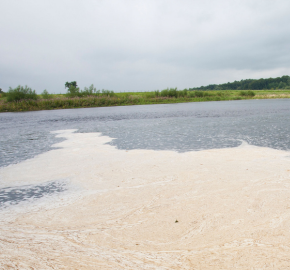
Climate change also plays a role, with flooding events aiding dispersal and rising temperatures increasing establishment success (LINK, 2024). Awareness of invasive species and biosecurity protocols remains patchy, and once a species becomes established, containment is extremely challenging.
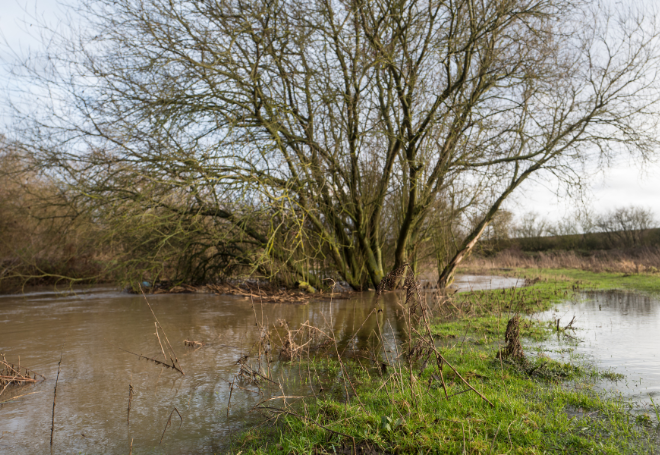
Image 02: Alongside modern pathways, increased flood events contribute to the spread of invasive species.
Invasion pathways alone do not fully explain the problem. Our degraded river systems are also more vulnerable to invasion.
Reduced water quality, widespread abstraction, channel modifications, and habitat degradation harm native animal and plant communities and reduce the overall ecological resilience of freshwater habitats. In these stressed systems, invasive species exploit vacant niches and disturbed environments, often thriving where native species struggle.
Managing the spread of invasive species
In an ideal world, eradication and population control would be the preferred responses. But, complete removal is difficult, costly, and can itself cause ecological harm. Targeted interventions can succeed, such as the Environment Agency’s eradication of black bullhead in Essex in 2016 but given the existing volume and increasing trends of invasive species prevention remains the most effective strategy.
Here are five ways you can help stop the spread of invasive species:
- Raise awareness: Education around invasive species, their impact and their pathways are key. Groups who have more exposure to aquatic environments (e.g. anglers and wild swimmers) or interact with non-native species regularly (e.g. aquarium keepers) are particularly important.
- Check, Clean, Dry: Take care with any personal equipment (from clothing to boats) used in freshwater habitats to stop the spread of invasive species. Further information can be found here.
- Monitoring: Report sightings of invasive species, particularly alert species, to the Non-native Species Secretariat (NNSS) through iRecord. Early detection of invasive species in new areas is vital to prevent their establishment.
- Be responsible with pets and plants: if you own exotic pets or ornamental plants make sure they do not enter the wild.
- Volunteer: Many charities run invasive species management activities such as ‘balsam bashing’ consider taking part. Local action groups can be found here.
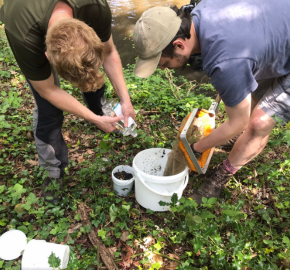
As part of their in-river monitoring, SmartRivers volunteers collect data about invasive species. Follow the link below to find out how a SmartRivers group could help protect your local river from the threat of invasive species.
Explore SmartRivers
List of references
Intergovernmental Science-Policy Plaform on Biodiversity and Ecosystem Services (IPBES). Invasive Alien Species Pose Major Global Threats to Nature, Economies, Food Security and Human Health (2023). Accessed here 13/01/26.: https://www.ipbes.net/IASmediarelease#
Non-native Species Secretariat (NNSS). Non-Native Species Report Card (2020). Accessed here 13/01/26.
Joint Nature Conservation Committee (JNCC). Pressure from invasive species (2025). Accessed here 13/01/26.
Environment Agency. Pacific Pink Salmon (Oncorhynchus gorbuscha) Advisory note (2025). Accessed here 13/01/26.
Dunmall, K, M. et al. Invading and range-expanding pink salmon inform management actions for marine species on the move. ICES Journal of Marine Science (2025) 82(1).
Non-native Species Secretariat (NNSS). Horizon Scanning – Annex 1 Top 20 Horizon Scanning (2025). Accessed here 13/01/26.
Hardwick et al. Invasive non-native plants indirectly destabilise riverbanks. Biological Invasions (2026) 28(23).
Wildlife and Countryside Link. Stemming the flood of invasive non-native species in the UK (2024). Accessed here 13/01/26.
By: Dr. Sam Green
Senior Freshwater Ecologist