A new expert report exposes the cumulative threat posed by Scottish salmon farms currently being ignored by local authorities – and the regulatory failure leaving wild salmon unprotected. In this blog, Nick Underdown, Scotland Director at WildFish, takes us through the findings and what this new information tells us about the impact of sea lice on wild fish.
Atlantic salmon are famed for their epic migrations, leaving their birthing gravel beds to fight their way downriver, then through firths and sea lochs to the open sea. However, in recent decades, their migrations have been made immensely more difficult in Scotland as they swim past dozens of industrial salmon farms.
The impact of sea lice on wild fish
Salmon farms are intensively stocked with such high densities of fish that sea lice parasites thrive and quickly multiply; sea lice larvae then disperse in their billions into surrounding waters. As young salmon leave Scotland’s rivers and head towards the open Atlantic, they pass through sea lochs and coastal waters plagued by these microscopic larval sea lice emanating from salmon farms. If just a few sea lice latch onto a young salmon (0.24 lice for every one gram of fish to be precise), that fish will almost certainly die during its migration. The lice progressively eat the skin and mucus from the fish to lethal effect. The artificial elevation of the concentrations of these lice is therefore a form of biological pollution.
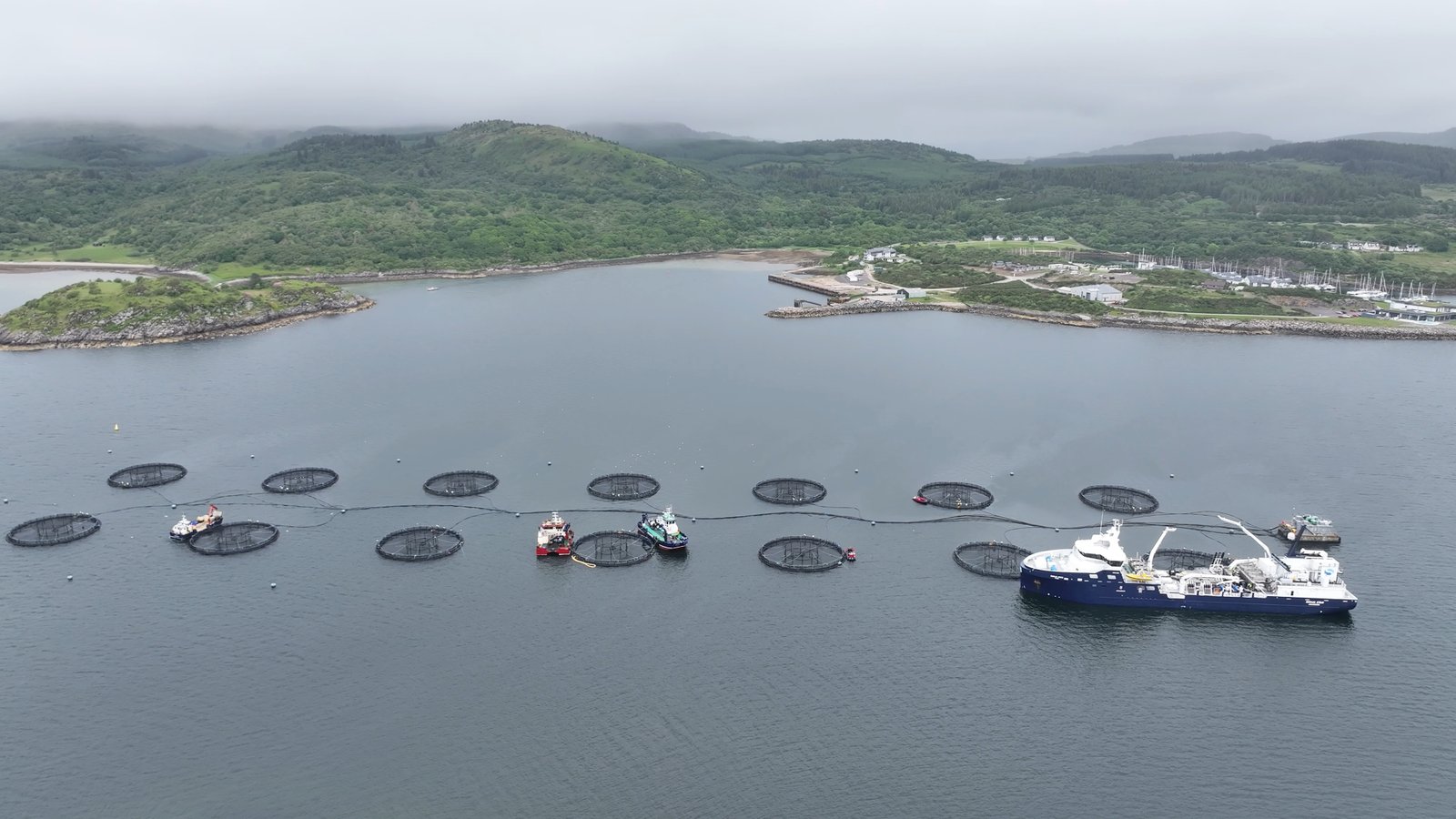
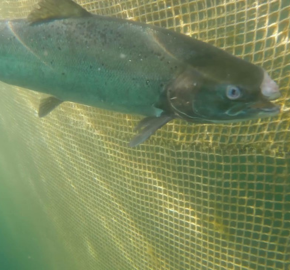
Image 01: an open-net salmon farm in Scotland. Sea lice disperse from farms like this into surrounding waters.
Salmon farms have made Scotland’s west coast a migration hazard for wild fish
A new modelling study [viewable here] commissioned by WildFish demonstrates just what a migration hazard Scotland’s west coast has now become. Sea lice released from salmon farms disperse over tens of kilometres, overlapping and accumulating as wild fish migrate past multiple farm areas.
The study – undertaken by Dr Tom Scanlon and Dr Matt Stickland – examines the dispersal of sea lice from all 16 operational salmon farms within the South Skye–Torridon study area, using official reported farm biomass data for 2024 and 2025. The study area encompasses Loch Nevis, Loch Hourn, Loch Alsh, Kyle Rhea, the Inner Sound and the wider coastal system extending north towards Loch Carron and Loch Torridon.
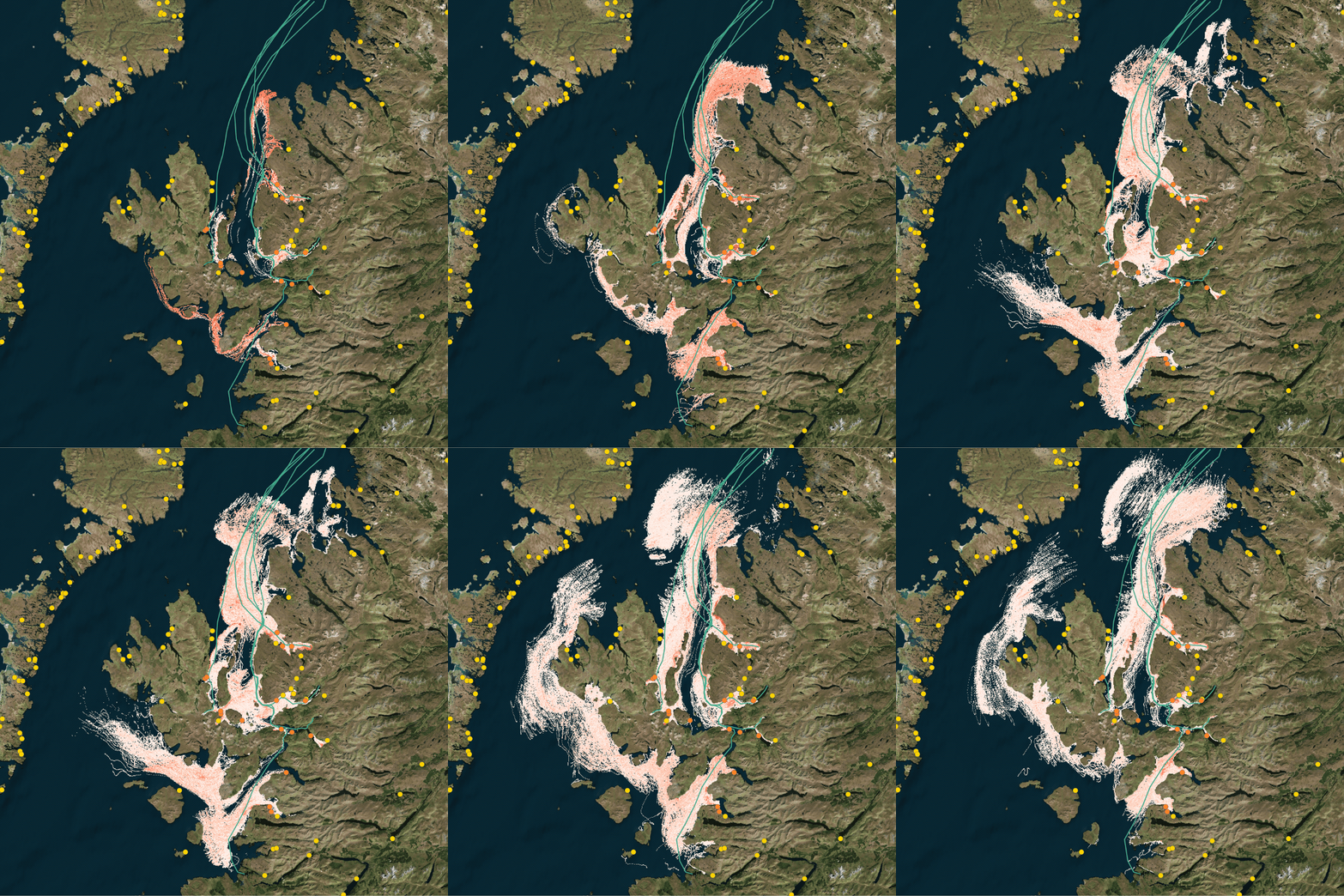
Image 02: An animated map tracks the modelled dispersal of sea lice over a twenty-three-day period (slides 1 – 5 show the modelled dispersal documented on days 1, 7, 14, 21, and 23). ©WildFish
The researchers combined a hydrodynamic model of tides and currents with biological modelling of sea lice. A simulated release of “virtual lice particles” from each of the 16 farms was tracked as they were transported through the marine environment. The model is sophisticated, accounting for the development and mortality of lice and their movement within the upper 10 metres of the water column. The modelling was also deliberately designed to align with the key assumptions in SEPA’s Sea Lice Regulatory Framework, including its precautionary 1.75 × biomass scaling factor which accounts for fluctuations in biomass. The researchers therefore modelled both reported farm biomass and the higher biomass scenario used for formal regulatory screening.
To examine what this dispersal could mean for wild fish, the researchers then modelled virtual Atlantic salmon post-smolts migrating through the affected waters during May, an important period for the seaward migration of young salmon. A migration route of approximately 120 km from Loch Nevis was assessed, alongside five additional plausible migration routes originating from the River Shiel, River Elchaig, River Carron, River Torridon and River Sligachan.
Assuming a young salmon swims continuously towards the open sea, the modelling shows that a fish leaving the River Carron, for example, will migrate through waters affected by infective sea lice from salmon farms.
Regulations are failing to protect wild fish
And yet while the science now makes this risk clear, our regulatory system sadly remains stuck in the past. Farms that pose a high risk of sea lice impacts on wild fish are allowed to continue operating at the same high stocking densities. At most, regulators can issue enforcement notices requiring salmon farm companies to expedite the de-lousing of fish with chemicals and other treatments. However, at no point are the farms at real risk of being closed or removed, despite posing an existential threat to the dwindling local populations of wild salmon and sea trout.
And for years, the salmon farming industry has sought to cast doubt on the scientific evidence linking farm-origin sea lice to impacts on wild Atlantic salmon. Thankfully, that debate is now well and truly over. Earlier this month, an independent review commissioned by the North Atlantic Salmon Conservation Organization (NASCO) concluded that aquaculture, and particularly sea lice, remains one of the principal human pressures affecting wild Atlantic salmon populations. Indeed the review concludes that “the true impact of salmon lice on wild salmon populations may be greater than current estimates.”
The Scottish Government’s own Chief Scientific Adviser (Marine) reached a similar conclusion. Reviewing the science underpinning SEPA’s proposed Sea Lice Regulatory Framework, the report concluded that the evidence indicates sea lice from salmon farms “have the potential to cause significant impacts on wild salmon populations.” It rejected claims that the science had been “misrepresented” or fundamentally exaggerated, concluding instead that multiple independent lines of evidence broadly converge on the same assessment of risk.
The Chief Scientific Adviser did, however, identify important shortcomings in Scotland’s proposed regulatory framework, including the need for improved assessment of cumulative and multi-site effects, alongside greater transparency and continued model development.
This new modelling adds another important piece to that evidence jigsaw, because it shows what cumulative impacts actually look like. Sea lice infestations don’t stay where they’re produced. Rather than remaining close to individual farms, sea lice disperse over tens of kilometres, moving between neighbouring sea lochs and creating a ‘soup’ of impact. The modelling demonstrates extensive hydrodynamic connectivity between farms and shows that wild salmon migrating to sea are exposed to sea lice originating from multiple farms during a single migration.
The maps accompanying this report illustrate that connectivity in stark detail. Individual plumes of sea lice larvae merge, overlap and spread across large areas of Scotland’s west coast, underlining that sea lice are a cumulative regional problem.
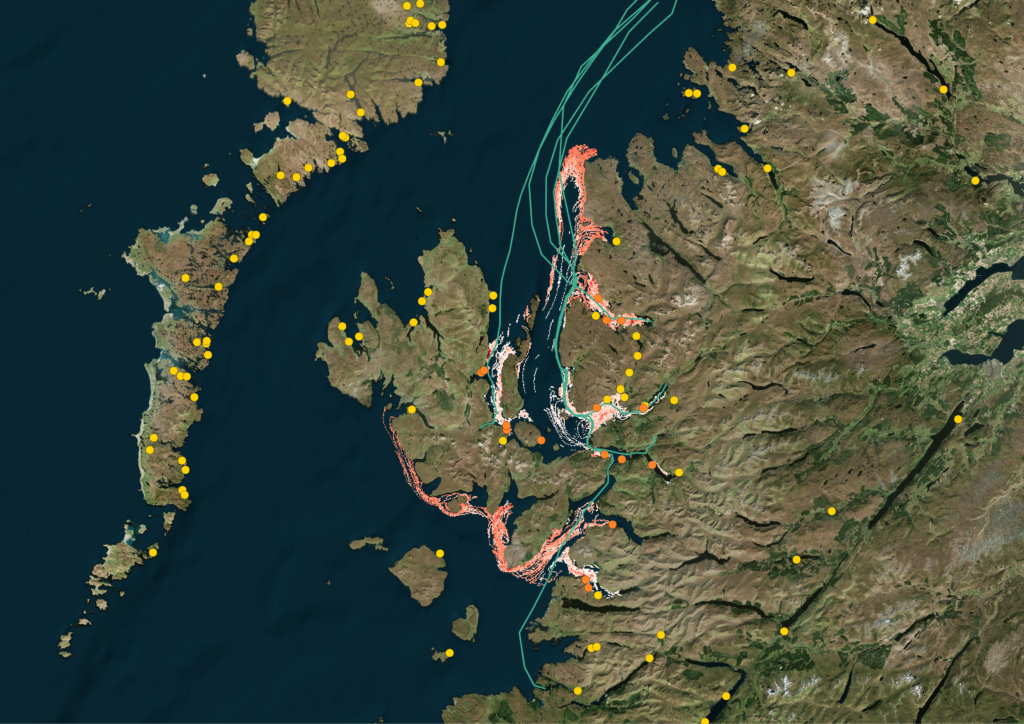
Image 03: A map showing the modelled dispersal of sea lice (in pink) on day 1. ©WildFish
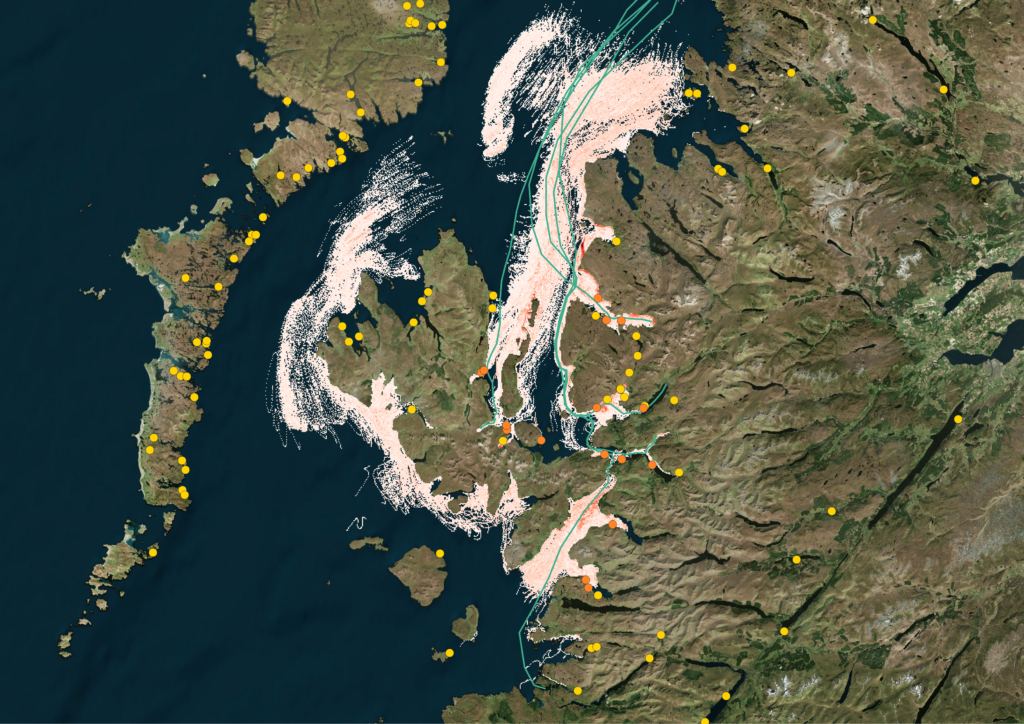
Image 04: The final snapshot of the modelled dispersal by day 23. ©WildFish
The perennial problem is that our regulations treat salmon farms as isolated sites, rather than assessing and managing those cumulative impacts. Scotland currently has no operational regulatory system that can do that. The Sea Lice Regulatory Framework developed by SEPA was intended to introduce stronger controls on sea lice. However, following mass legal appeals by the salmon farming industry, those licence conditions have effectively been stalled since March 2025. So in practical terms, our regulators and local authorities continue to consent and approve salmon farms without an operational regulatory system capable of assessing their combined impacts on migrating wild salmon.
Sadly, this is exactly what we warned would happen. In February 2024, we submitted a formal representation to Environmental Standards Scotland, alongside the Coastal Communities Network Scotland, arguing that the proposed regulatory framework failed adequately to protect wild salmon from salmon farm sea lice. That complaint remains open.
One of our central concerns was that the proposed framework failed properly to account for cumulative impacts. While the framework models sea lice exposure within defined Wild Salmonid Protection Zones, it does not adequately capture the cumulative burden experienced by fish migrating through multiple farming regions. The Chief Scientific Adviser report did not resolve that concern. Instead, the review acknowledged the need for “cumulative system assessment” where multiple farms interact and recognised that further development of the modelling is required. We don’t protect people from air pollution by asking whether each chimney is individually safe; we ask whether the air people breathe is safe, taking all the pollution sources together, and regulating individual emitters accordingly. Our wild salmon – an endangered species on a trajectory towards extinction – deserve the same approach.
This new modelling demonstrates precisely why this is needed. Wild salmon migrating from Scotland’s west coast do not reset their exposure to sea lice each time they pass another farm.
An urgent moratorium on new farms
The question that Ministers, regulators and planning authorities now need to answer is clear: why are new salmon farms being approved? Local authorities continue to determine planning applications for new salmon farms and farm expansions. Those decisions add further sources of sea lice into already connected coastal systems. Yet they are being made in the absence of an operational regulatory framework capable of assessing the cumulative regional impacts demonstrated in this study.
With wild salmon populations in continued freefall, this is an untenable position.
Scottish Ministers have accepted that sea lice threaten wild salmon. Its own scientific advisers have confirmed the evidence supporting that conclusion and an independent international review has reached the same finding.
Until an effective system exists to assess and manage cumulative sea lice impacts, local authorities should not be giving planning consent for new open-net salmon farms or expansions of existing sites. We will be closely monitoring planning decisions that continue to permit salmon farm expansion before cumulative sea lice impacts can be properly assessed. We will not hesitate to challenge decisions where we believe our environmental obligations to protect the future of wild salmon are not being met.
Keep up-to-date with our vital work on this important issue: sign up to receive updates, insights, and actions from the WildFish team.
Sign Me Up
By: Nick Underdown
Director, Scotland