In the first blog in this series, we set out the scale of Britain’s river barrier problem. Only 1% of rivers are completely free of artificial barriers, and just 3.3% of the river network allows unrestricted movement of aquatic species. Across Great Britain, there are an estimated 0.75 barriers per kilometre of river, creating a heavily disrupted landscape for wildlife.
But what does that actually mean for the fish trying to navigate these rivers? In this blog, our campaigns researcher, Danny Nixon, looks at how barriers affect fish populations and why even a single small weir can have consequences that ripple through an entire river system.
To understand why barriers are so damaging, it helps to understand how fish use rivers. For most of our native species, a river is not a static habitat but a dynamic one, a space to be moved through, in different directions, at different times of year.
The fish impacted by barriers
Atlantic salmon hatch in the cool, gravel-bedded headwaters of upland rivers, spend years growing in the ocean, then return often to the very same stretch of river where they were born to spawn. European eels make the reverse journey, growing up in our rivers for decades before migrating thousands of miles to the Sargasso Sea off the coast of North America to breed. Other endangered native fish species, such as twaite shad, sea trout and lampreys, also depend on the ability to move freely along rivers and between freshwater and the sea. These are known as diadromous fish, and they are particularly affected by river barriers.
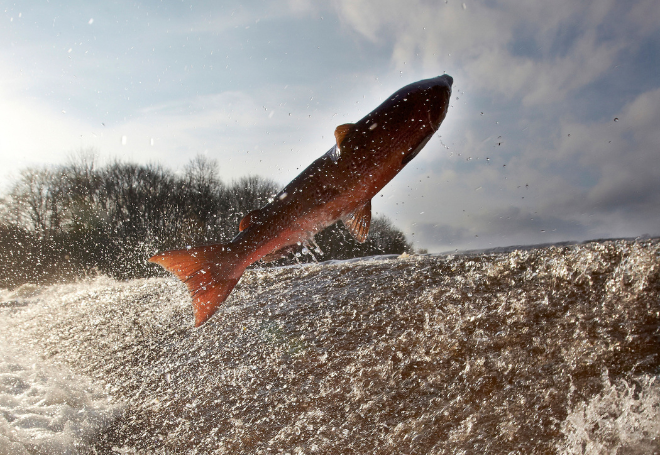
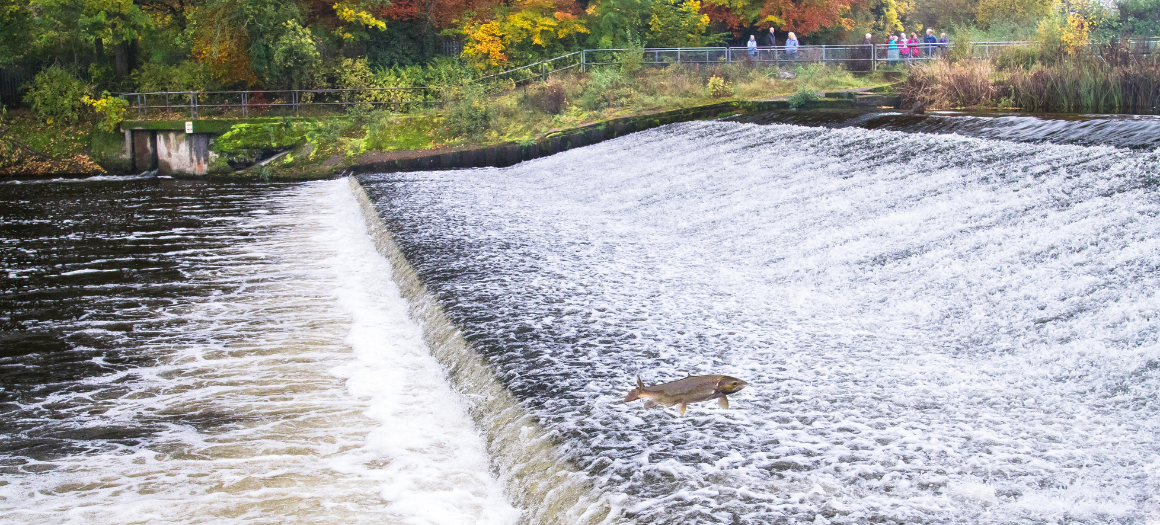
Image 01: Barriers prevent migratory fish like the wild Atlantic salmon from moving freely along rivers and between freshwater and the sea – journeys vital to their survival.
However, even fish that don’t migrate to the ocean, like brown trout, grayling and even little minnows, need to move within river systems. They may travel to find food, seek shelter in winter, or access specific gravel beds for spawning. Connectivity matters for every fish in our rivers, not just the famous migratory species.
Barriers interrupt that movement, either partly or completely, depending on the extent of the barrier, which can significantly harm wild fish populations.
A crisis hidden in plain sight
In England, 674 rivers failed to achieve good ecological status in 2023 due to barriers to fish migration and impoundments (Rivers Trust, 2025). Of the seven freshwater fish species at risk of extinction in the UK, barriers are explicitly cited as a driving factor in the decline of four of them: Atlantic salmon, European eel, allis shad and twaite shad.
And yet, less than 1% of barriers in the UK have any fish passage provision at all. Many have been sitting in our rivers for over a century, long since abandoned by the industries that built them, silently fragmenting habitats and blocking the migrations of fish that were here long before the first mill wheel turned.
How is their impact felt by wild fish?
1. Barriers physically block fish movement
First and foremost, barriers physically block fish movement within river systems. This can be particularly problematic for migratory fish species, but all fish species need uninterrupted river connectivity in order to thrive.
- Barriers reduce the number of fish that can pass: Even where a fish pass exists, no barrier is 100% passable. Every obstacle reduces the proportion of fish that successfully get through. In a river with multiple barriers in sequence, those reductions compound quickly (Buddendorf et al., 2019). A fish pass operating at 95% efficiency sounds good in isolation, but across a series of barriers the cumulative effect dramatically reduces the number of fish reaching their spawning grounds. For species already in decline, this matters enormously.
- Barriers delay migration and increase energy expenditure: Fish may be held up for hours, days or even weeks below a barrier, waiting for the right flow conditions or expending energy searching for a route through (Nyqvist et al., 2017). This delay has consequences. For salmon and sea trout, late spawning reduces the chance that eggs will survive winter conditions. For eels migrating downstream to the sea, delay adds to an already exhausting journey they must complete in good condition to have any chance of successfully spawning in the Sargasso Sea, over 5,000 km away. A recent tracking study of twaite shad, one of Britain’s most threatened migratory fish found that weirs alone increased downstream migration times by a median of 61%, with temperature and flow conditions having comparatively little impact by comparison (Yeldham et al., 2024).
- Barriers can stop fish entirely: Where a barrier is impassable and no alternative route exists, fish simply cannot get through. This leads to localised extinctions upstream as populations are cut off from the wider river network (Sun et al., 2022). Research consistently shows that the absence or reduced abundance of migratory fish species above barriers is one of the clearest indicators of how a barrier can completely sever a river.
2. Barriers cause migratory fish to use up vital energy reserves
Even where fish do successfully pass a barrier, the energy they expend doing so has consequences. Every leap over a weir, every struggle through a culvert against strong flow, every waiting period in a holding pool below an obstacle. All of these delays cost energy and time that would otherwise go towards growth, reproduction and migration.
Many migratory species (such as salmon and eels) cease feeding when they begin their migrations to reproduce, relying entirely on stored energy to power their journey, navigate obstacles, and reproduce. Excessive barriers can leave migratory fish in an energy debt – a deficit in stored energy reserves incurred when the energy expended during migration and spawning exceeds the stored energy the fish had available upon leaving their feeding grounds, reducing the chances of a successful migration.
Case Study: European Eel
For eels, this is particularly critical. European eels must enter our rivers as tiny glass eels, grow for anywhere between 10 and 30 years, then make a 5,000–6,000 km journey back to the Sargasso Sea to spawn, a journey from which they do not return.
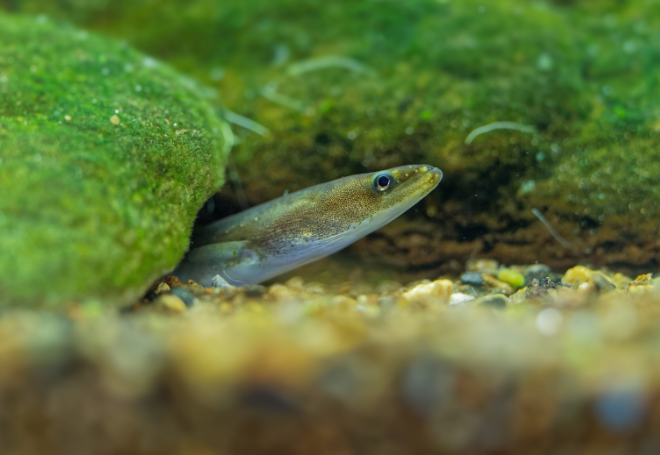
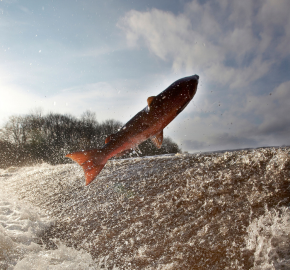
Image 02: the cumulative effect of passing multiple barriers heavily depletes the energy reserves need by European eels to make the journey from rivers to the Sargasso Sea.
They need their energy reserves to undertake this epic journey. Studies on heavily obstructed rivers in central Europe have found silver eel escapement rates of as low as 15%, as the cumulative toll of multiple barriers proves too much (Breukelaar et al., 2009). Across Europe, eel populations have declined by 90-99% since the 1970s, and in the UK populations have fallen by more than 80% in four decades (Bevacqua et al., 2015; Franch et al., 2025). Barriers have consistently been identified as one of the driving factors in their decline, where they have remained on the IUCN red list of threatened species, listed as ‘critically endangered’ continuously since 2006 (Pike et al., 2020).
3. Barriers damage the entire river ecosystem
The damage caused by barriers extends well beyond the fish themselves. By interrupting the natural flow of water, barriers alter the physical character of the river in ways that degrade habitat for everything living in it including:
a. Disruption to natural sediment processes
Sediment is one of the most important (and often overlooked) aspects of river ecology. Rivers naturally move gravels, sands and fine particles downstream, creating the diverse bed structures that invertebrates, plants and fish depend on.
Barriers interrupt this process, trapping sediment upstream and starving habitats downstream of the material they need. For salmon and trout, which spawn in clean, well-oxygenated gravel, fine sediment accumulation is particularly damaging, as it can smother eggs and dramatically reduce survival rates from egg to fry (Jensen et al., 2009).
Sediments also carry important nutrients, transferring them between the land and sea. Decreased fertility of arable land downstream can occur when sediments are removed or reduced in a river system. This accumulation of sediments behind barriers also reduces available water storage capacity. The UK and Ireland have lost the most capacity to sediments of any countries in the world-predicted to reduce water storage capacity by over 35% by 2050 (Perera et al., 2023).
Across the world, river barriers often form the first line of defence against flooding, reducing the global population directly at risk of flooding by around 20% (Boulange et al., 2021). However, as sediment accumulates and water storage capacity reduces, many will find themselves more vulnerable to flooding as climate change increases the frequency and magnitude of storms, negating many of the flood alleviation properties of river barriers.
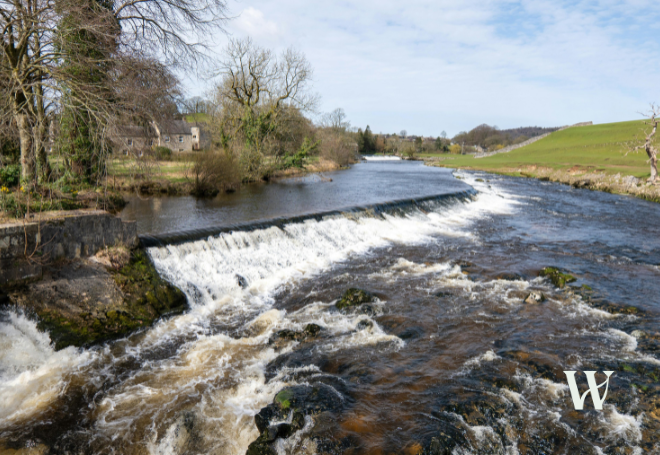
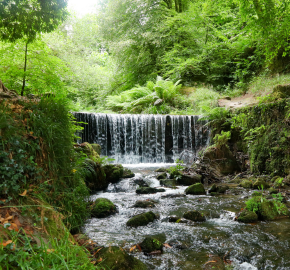
Image 03: River barriers like this weir interrupt the natural flow of water and are problematic for the habitat and everything living in it.
b. Changes in water temperature
Water temperature is also affected. Many small weirs and impoundments act as collectors of solar radiation. Smaller barriers release this warmer surface water over their top, whilst the cooler deeper water cannot escape below the barrier. Studies of small dams in the United States found that downstream river temperatures shifted from cold to warm water classifications in 75% of cases (Zaidel et al., 2021). For cold-water species like salmon and trout already under pressure from climate change, this warming effect can push rivers beyond the thermal limits these fish can tolerate.
c. Concentration of pollutants
Then there are the pollutants. Barriers trap not just sediment, but the contaminants bound to it, such as heavy metals, pesticides and industrial chemicals (Palanques et al., 2014; Watkins et al., 2019). Behind thousands of ageing weirs and dams across the UK, decades of pollution may be locked in place. This is not a benign situation: these trapped pollutants degrade water quality, affect the invertebrates that fish depend on for food, and pose risks for species higher up the food chain through bioaccumulation.
Eventually, polluted sediments are dispersed, either during barrier maintenance, or removal. These polluted sediments can become re-activated and pollute the river again, or wherever this waste is removed to.
Tailing dams are an extreme example. They contain hazardous slurry from mining, holding toxic heavy metals, processing chemicals, and acid-generating minerals. Lethal elements such as arsenic, cadmium, lead, mercury and even radioactive material are commonly found behind tailing dams, and climate change is making them even more unstable.
Reconnecting UK rivers
The good news is that we know what works. When barriers are removed, rivers respond quickly. Fish return to previously inaccessible reaches, sediment starts moving again, spawning gravels are restored. Recovery is not guaranteed, but the evidence consistently shows it is possible, and often faster than expected.
In our next blog, we’ll look at why so many of these barriers were built in the first place, which ones we still need and which ones are simply relics of a different era, causing unnecessary damage to our rivers and the fish that depend on them.
Want more content like this? Sign up to stay connected with the latest news and actions from WildFish.
Subscribe Today
List of References
Bevacqua, D., Melià, P., Gatto, M., & De Leo, G. A. (2015). A global viability assessment of the European eel. Global Change Biology, 21(9), 3323–3335. https://doi.org/10.1111/gcb.12972
Boulange, J., Hanasaki, N., Yamazaki, D., & Pokhrel, Y. (2021). Role of dams in reducing global flood exposure under climate change. Nature Communications, 12(1), 417. https://doi.org/10.1038/s41467-020-20704-0
Breukelaar, A. W., Ingendahl, D., Vriese, F. T., De Laak, G., Staas, S., & Klein Breteler, J. G. P. (2009). Route choices, migration speeds and daily migration activity of European silver eels Anguilla anguilla in the River Rhine, north-west Europe. Journal of Fish Biology, 74(9), 2139–2157. https://doi.org/10.1111/j.1095-8649.2009.02293.x
Buddendorf, W. B., Jackson, F. L., Malcolm, I. A., Millidine, K. J., Geris, J., Wilkinson, M. E., & Soulsby, C. (2019). Integration of juvenile habitat quality and river connectivity models to understand and prioritise the management of barriers for Atlantic salmon populations across spatial scales. Science of The Total Environment, 655, 557–566. https://doi.org/10.1016/j.scitotenv.2018.11.263
Canal River Trust. (2017). Tees Barrage fish pass update. The Canal & Rivers Trust. https://canalrivertrust.org.uk/things-to-do/fishing/blogs-articles-and-news/the-fisheries-and-angling-team/tees-barrage-fish-pass-update
Franch, N., Capdevila, P., Fanlo, H., Queral, J. M., & Clavero, M. (2025). Recent Eel Decline in a Large Mediterranean Wetland. Aquatic Conservation: Marine and Freshwater Ecosystems, 35(1), e70046. https://doi.org/10.1002/aqc.70046
Jensen, D. W., Steel, E. A., Fullerton, A. H., & Pess, G. R. (2009). Impact of Fine Sediment on Egg-To-Fry Survival of Pacific Salmon: A Meta-Analysis of Published Studies. Reviews in Fisheries Science, 17(3), 348–359. https://doi.org/10.1080/10641260902716954
Nyqvist, D., Greenberg, L. A., Goerig, E., Calles, O., Bergman, E., Ardren, W. R., & Castro-Santos, T. (2017). Migratory delay leads to reduced passage success of Atlantic salmon smolts at a hydroelectric dam. Ecology of Freshwater Fish, 26(4), 707–718. https://doi.org/10.1111/eff.12318
Palanques, A., Grimalt, J., Belzunces, M., Estrada, F., Puig, P., & Guillén, J. (2014). Massive accumulation of highly polluted sedimentary deposits by river damming. Science of The Total Environment, 497–498, 369–381. https://doi.org/10.1016/j.scitotenv.2014.07.091
Perera, D., Williams, S., & Smakhtin, V. (2023). Present and Future Losses of Storage in Large Reservoirs Due to Sedimentation: A Country-Wise Global Assessment. Sustainability, 15(1), 219. https://doi.org/10.3390/su15010219
Pike, C., Crook, V., & Gollock, M. (2020). Anguilla anguilla. The IUCN red list of threatened species. International Union for Conservation of Nature, 2020.
Rivers Trust. (2025). Barrier Removals. The Rivers Trust. https://theriverstrust.org/about-us/our-position-statements/barrier-removals
Sun, J., Tummers, J. S., Galib, S. M., & Lucas, M. C. (2022). Fish community and abundance response to improved connectivity and more natural hydromorphology in a post-industrial subcatchment. Science of The Total Environment, 802, 149720. https://doi.org/10.1016/j.scitotenv.2021.149720
Watkins, L., McGrattan, S., Sullivan, P. J., & Walter, M. T. (2019). The effect of dams on river transport of microplastic pollution. Science of The Total Environment, 664, 834–840. https://doi.org/10.1016/j.scitotenv.2019.02.028
Yeldham, M. I. A., Britton, J. R., Crundwell, C., Davies, P., Dodd, J. R., Nunn, A. D., Velterop, R., & Bolland, J. D. (2024). Emigration of post-spawned twaite shad Alosa fallax, an anadromous and iteroparous fish, in a highly fragmented river. Journal of Fish Biology, 104(6), 1860–1874. https://doi.org/10.1111/jfb.15713
Zaidel, P. A., Roy, A. H., Houle, K. M., Lambert, B., Letcher, B. H., Nislow, K. H., & Smith, C. (2021). Impacts of small dams on stream temperature. Ecological Indicators, 120, 106878. https://doi.org/10.1016/j.ecolind.2020.106878
By: Daniel Nixon
Campaigns Researcher